Photo by Amanda Hubbard
In Living With Fire in Sonoma Valley, we delve deeper into what the reality of longer, drier seasons and volatile fire weather means for ecological stewardship in the Valley. Told through the lens of Sonoma Ecology Center staff working in the fields of restoration, research, and environmental planning, we’ll explore how a multi-benefit approach—from prescribed burns to habitat restoration—helps our landscapes and communities live with fire. Read the first installment here.

For Sonoma Ecology Center’s restoration team, fire resilience is built into all of the fieldwork and research they do year round. “We are always thinking about proactive land stewardship–what we can do to keep forests and natural systems around us healthy and functioning,” says Restoration Program Manager, Lauren Claussen.
That mindset is grounded in the understanding that healthier ecosystems are more resilient to fire and better able to protect their surrounding communities from the most severe impacts. As we approach a decade since the 2017 fires, we are starting to get a clearer picture of their longer term impacts and what made them so destructive in the first place.
Fire—when thoughtfully managed—can be part of a natural and necessary process to create healthier landscapes and safer communities.
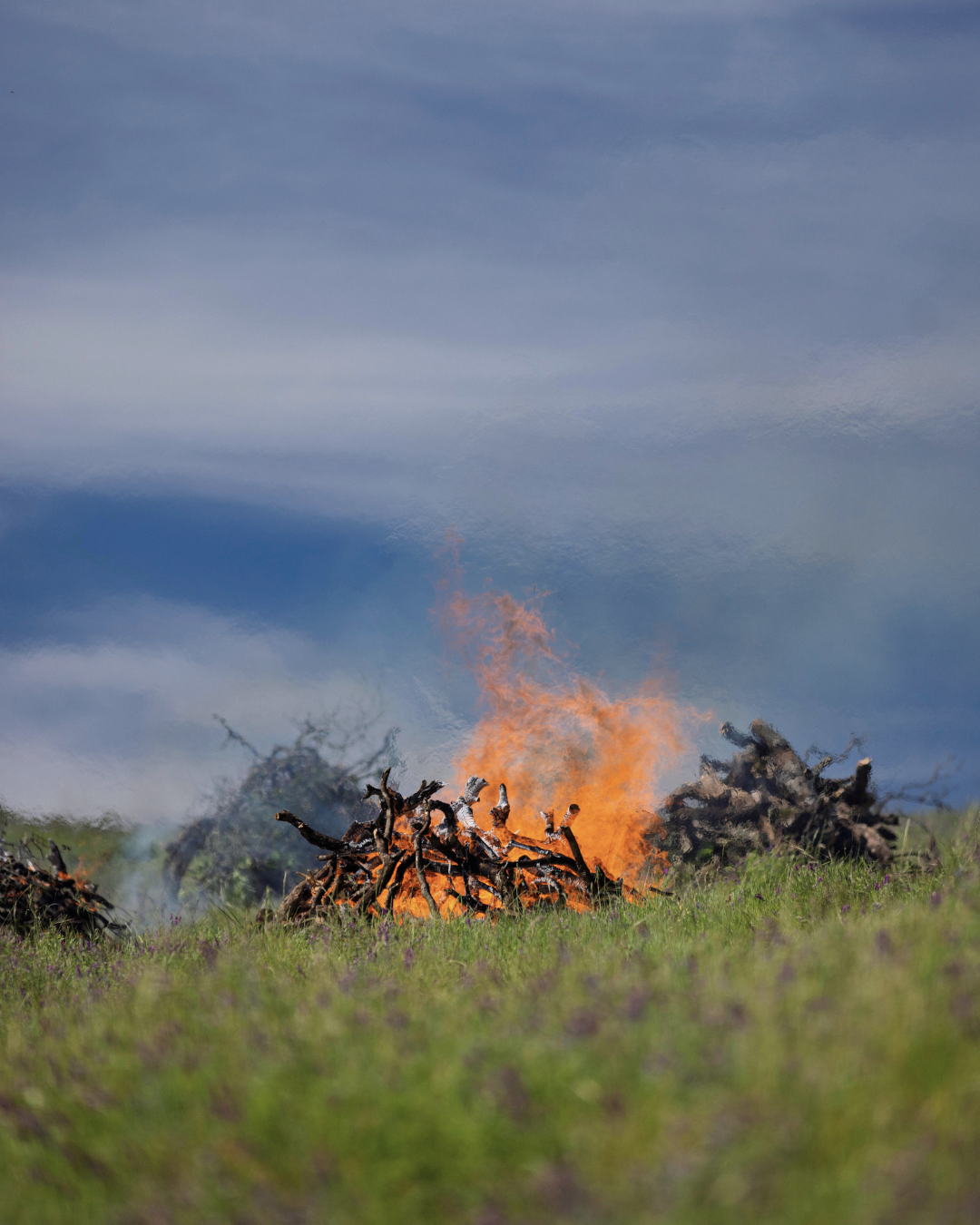
Photo by Conor Hagen
“Prior to the fires in 2017, there had not been a lot of preemptive fuels management in Sonoma County for many decades,” Lauren explains. This legacy of fire suppression has led to increased fuel buildup, reduced biodiversity and made catastrophic wildfires more likely.
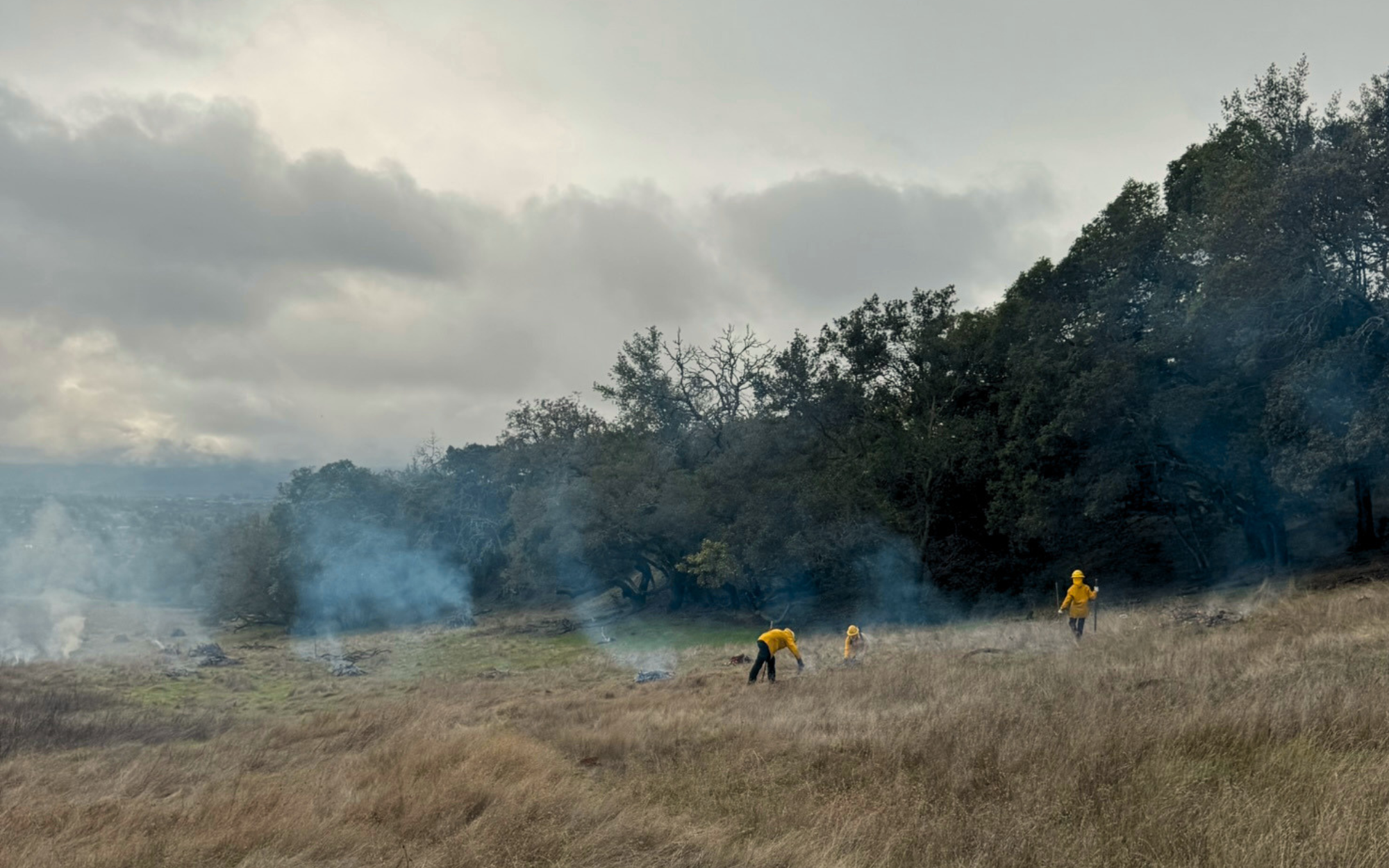
SEC’s Restoration Team is working to reverse those trends through ecologically informed fuel management and restoration, prioritizing areas that have gone decades without; an urgency underscored by the devastation caused by excess fuel in the 2017, 2019, 2020 and the 2021 fires seasons. From 2023-2025, a State Coastal Conservancy grant supported extensive restoration and fire prevention work at Montini Preserve, culminating in a prescribed burn last year, with impactful early results. The reintroduction of “good fire,” through prescribed burns, is a key part of this work, aligning with both Indigenous practices and modern fire ecology.
In partnership with The Good Fire Alliance–initially co-founded by All Hands Ecology, UC Agriculture and Natural Resources, and Sonoma County Resource Conservation District in the aftermath of the 2017 fires–SEC has helped lead burn pile demonstrations, workshops and community education efforts at Van Hoosear Wildflower Preserve and elsewhere to share how fire when thoughtfully managed, can be part of a natural and necessary process to create healthier landscapes and safer communities.
Low-intensity controlled burns reduce fuel, improve habitat and support native plant regeneration. At Montini and in fuels reduction work done on private lands, the team has also incorporated native grass seeding into burn areas, helping to restore ecological balance and reduce the likelihood of invasive species returning. The goal is not less vegetation, but better-structured, more fire-resilient ecosystems.
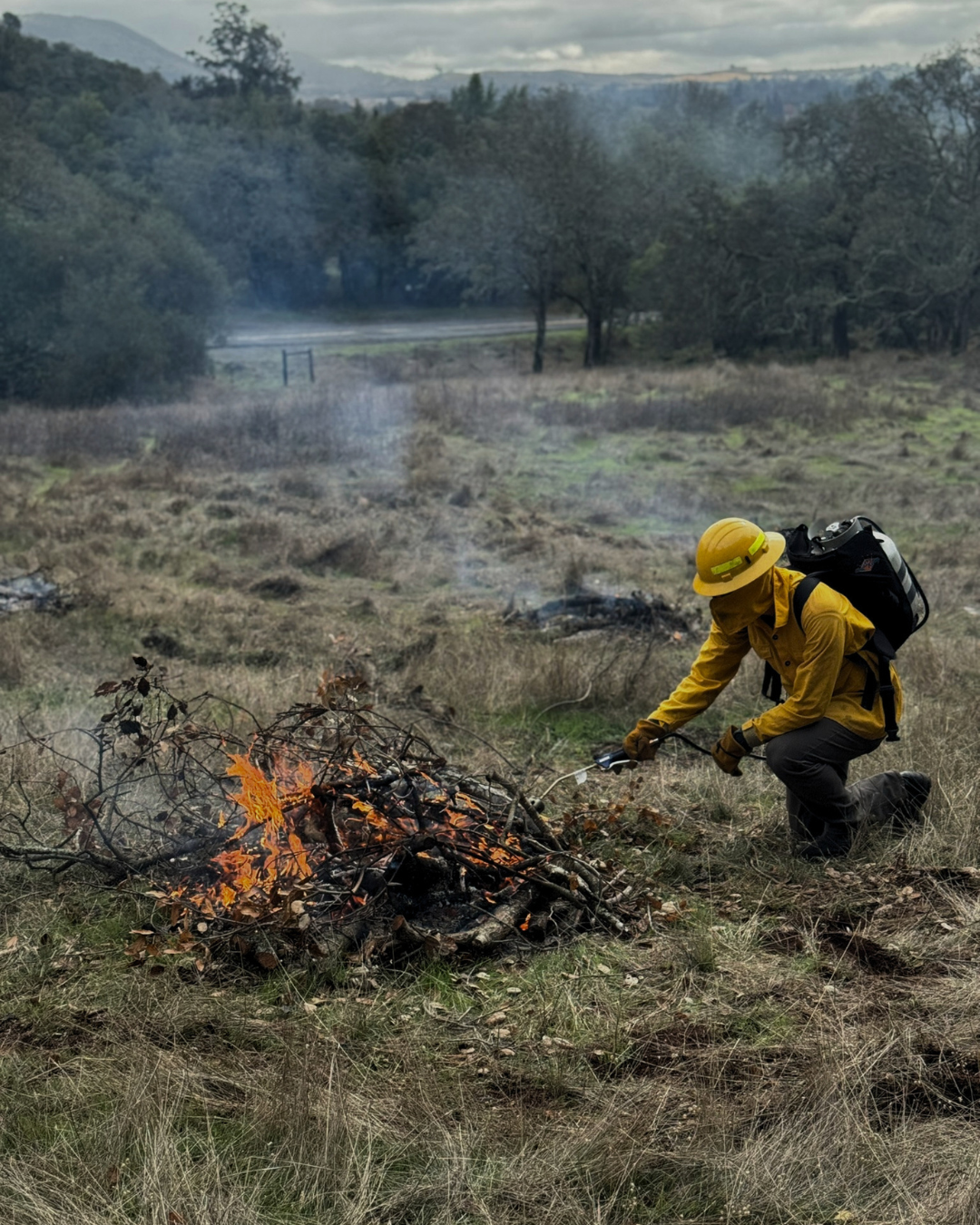
The Restoration Crew conducts seasonal pile burns to remove excess vegetation at Montini Open Space Preserve. Photo by Amanda Hubbard.
At Bartholomew Park, Lauren and Restoration Project Manager Manuel Hernandez—an ISA Certified Arborist and Certified Wildland Firefighter—are leading another large-scale effort alongside restoration technicians Josh Zupan, Olivia Clary, and William Read. In this stretch of land that has not been cleared since the 2017 fires, they are creating a shaded fuel break along roads and trails, hand pulling and thinning overly dense vegetation, removing dead or dying trees and ladder fuels, as well as targeting invasive species like French Broom.
They approach this work with the mindset of “ecologically informed fire management,” retaining tree canopy, preventing invasive species spread, and promoting healthy forest structure. A shaded fuel break, for example, reduces fire risk while maintaining the health of the canopy and the habitat it supports. Over the winter, the crew completed about six acres, and have another 60 acres planned for this summer and fall. Work paused during the spring to avoid impacts to nesting birds, but they are eager to get back in the field to continue this fuels reduction effort they see as essential to both community safety and ecological health.
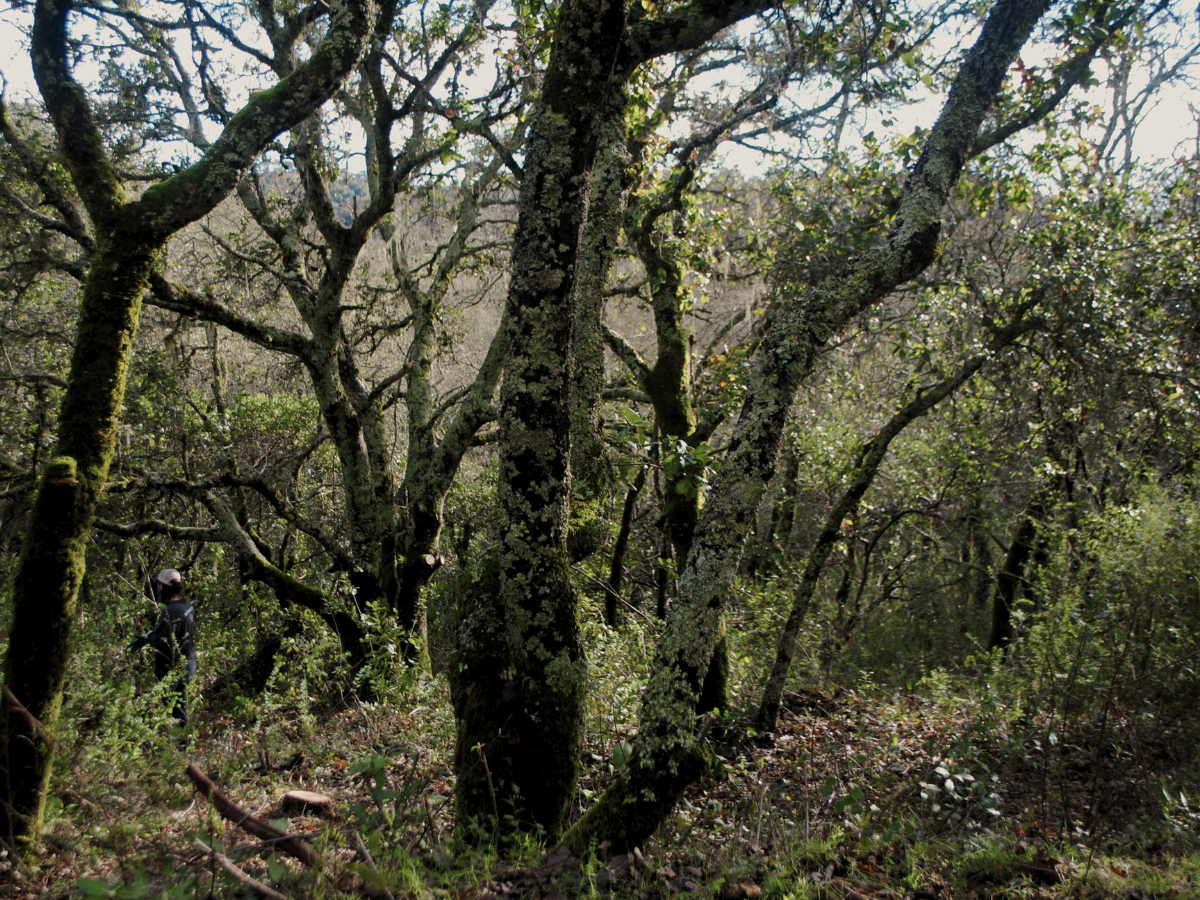
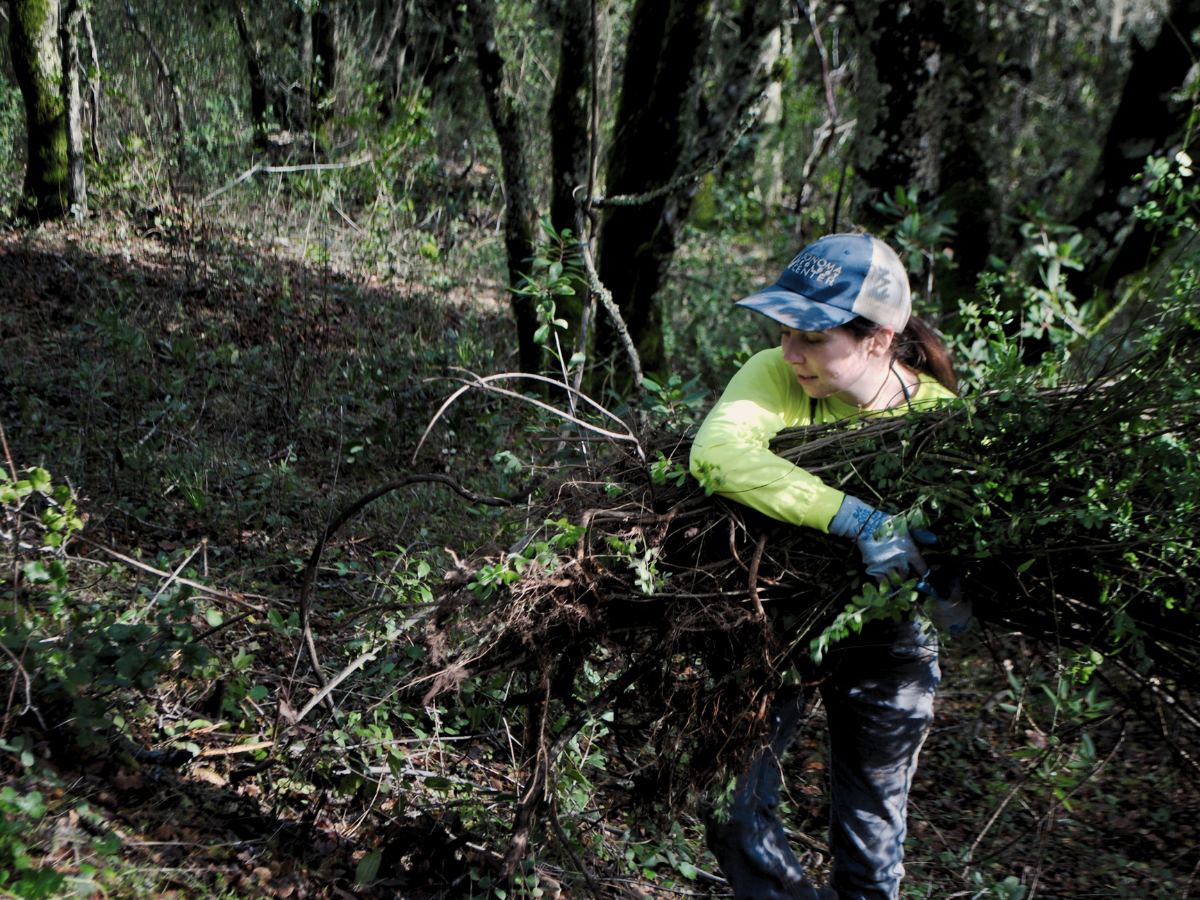
At Bartholomew Park, Restoration Technicians William Read and Olivia Clary clear dense vegetation, made up of invasive species like French Broom, to create a shaded fuel break. Photos by Aila Fassett.
For Manuel, this work is deeply personal. While studying plant physiology in Costa Rica, he watched the 2017 fires unfold back home. Inspired by a professor involved in post-fire research, he returned to pursue a master’s degree in fire ecology. Through both his education and field experience, Manuel has come to believe that “a timely and comprehensive approach to fuels reduction is one of the biggest needs in our county.”
The work he, William, Olivia and Josh do is demanding—hand-thinning forests, removing invasive species, cutting deadwood, and managing dense undergrowth. “It’s a massive undertaking,” Manuel says. “Much of this work has been neglected for decades.” But progress is visible. Increased funding and support are helping expand these efforts, including programs like EQIP and the North Bay Forest Improvement Program, which provide financial reimbursement to private landowners for fire prevention work. Additional support from the March Conservation Fund has helped sustain SEC staff capacity.
Beyond fire prevention, the benefits of this work ripple outward. The team is already seeing the benefits of a more balanced ecosystem on animals and insects. William recalls noticing a deer resting in the shade beneath a large oak tree after a week spent clearing dense and overgrown French broom growing around the base of the tree. “Before, there was no room for the deer to find shade,” he said. “and now there is. The work just makes you feel good.”
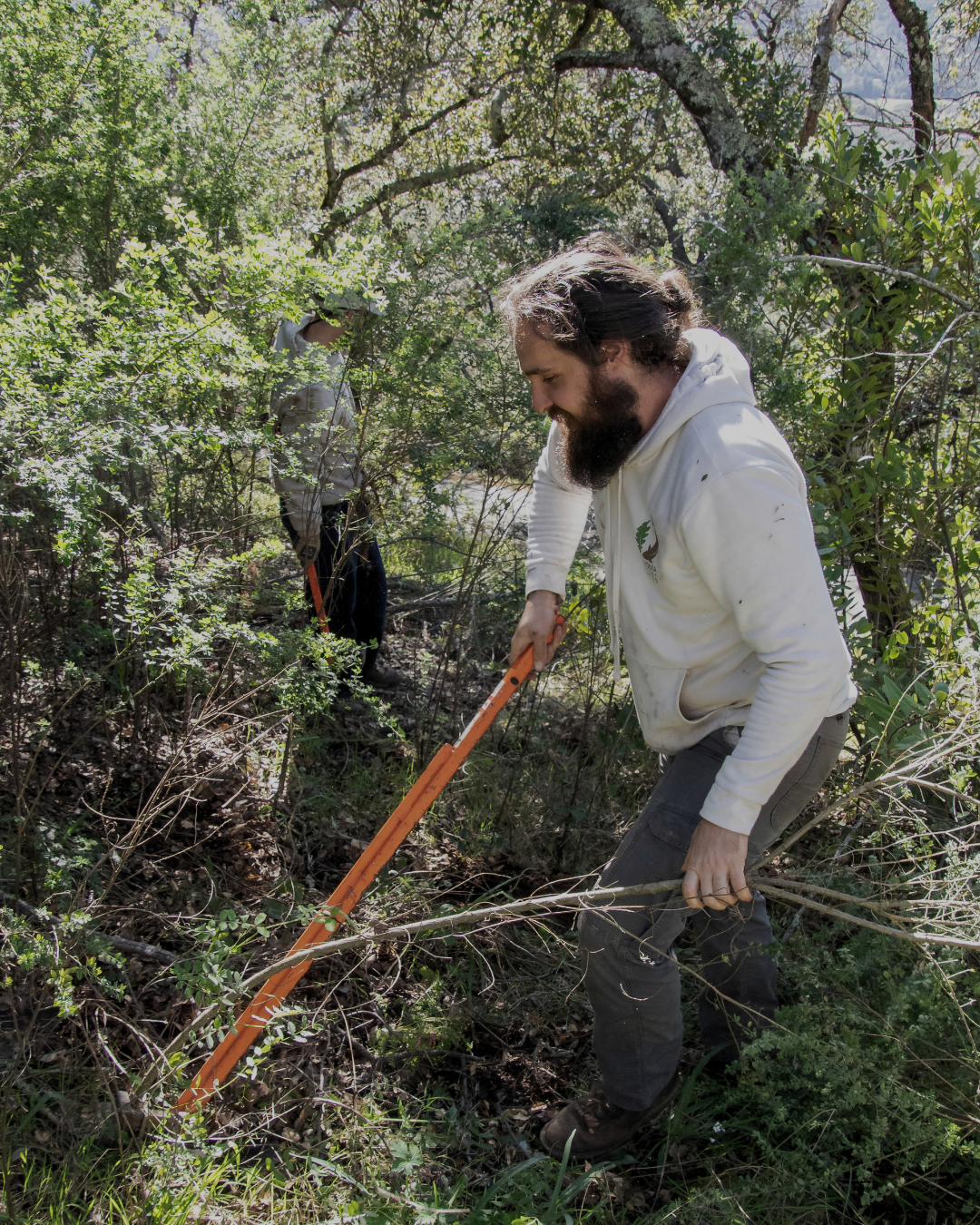
Restoration Project Manager Manuel Hernandez. Photo by Melania Mahoney.
Don’t miss out on new articles on The Ecology Blog—sign up for our newsletter and follow @sonomaecologycenter on Instagram and Facebook