
Wildflowers start to bloom along the trails at Sugarloaf Ridge State Park as early as January, hinting at the promise of spring! Now retired from the United States Forest Service (USFS), Jim Webb lends his expertise to Sugarloaf’s team of trail patrol volunteers, where he crafts seasonal trail reports about the various plant species he encounters at the park. His Wildflower Reports are a naturalist’s treat, and his most recent efforts, concentrated on meticulous examination of data from our trails, has led to improved data concerning ease of access descriptions of trails and areas in the park.
Vista Trail
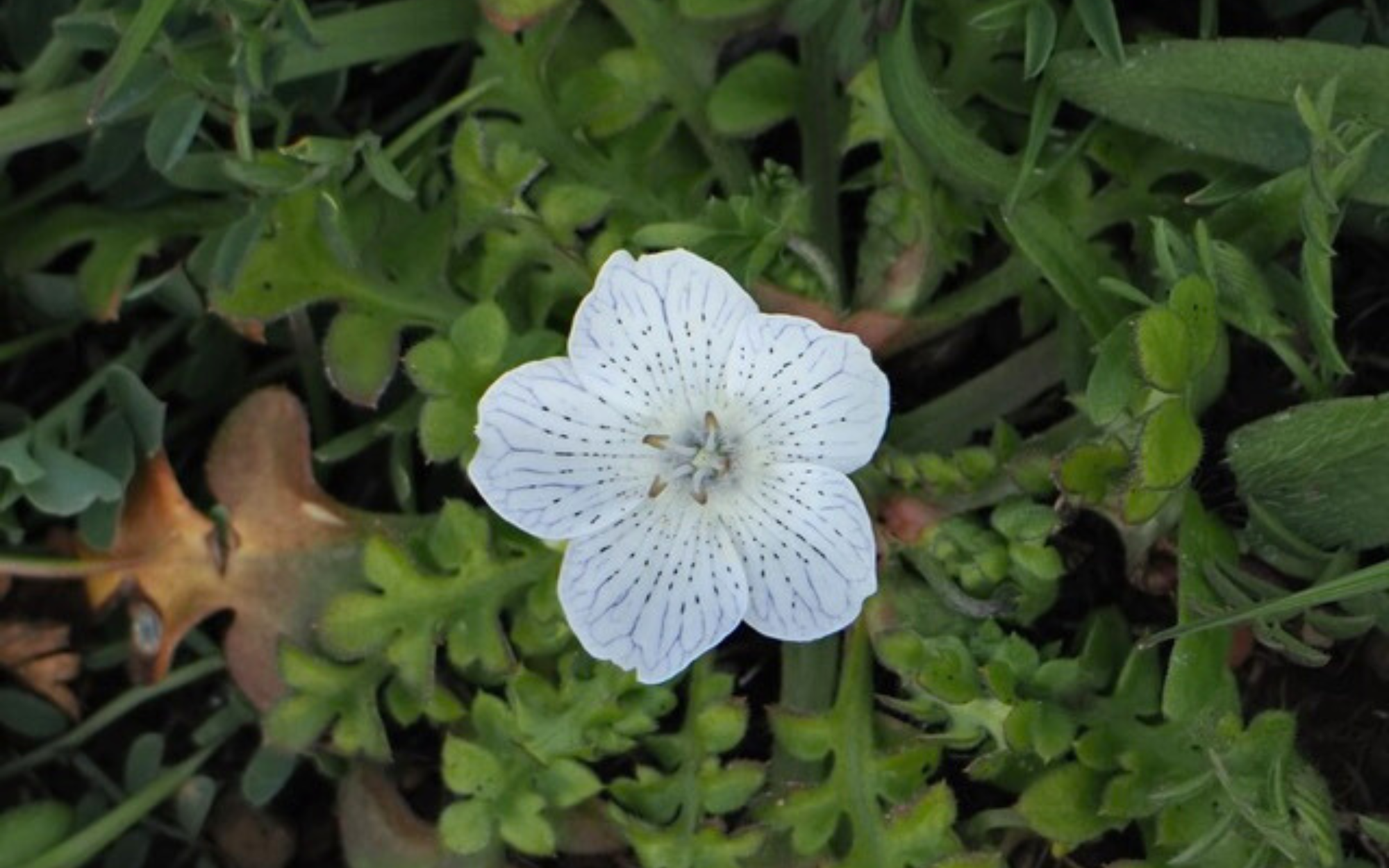
The Vista Trail is well graded and in good condition, although steep sections contain many crib and rock steps and other sections are rocky. Flowering plants currently blooming along the trail include blue dicks (Depterostemon capitatus, shown above), California bay laurel (Umbellularia californica), common manzanita (Arctostaphylos manzanita), hoary manzanita (Arctostaphylos canescens), nightshade (Solanum xanti), rosilla (Helenium puberulum), milk maids (cardamine californica), canyon nemophila (Nemophila heterophylla), California buttercup (Ranunculus californicus), canyon sweet pea (Lathyrus vestitus), mosquito bills (Primula hendersonii), and orange bush monkeyflower (Diplacus aurantiacus).
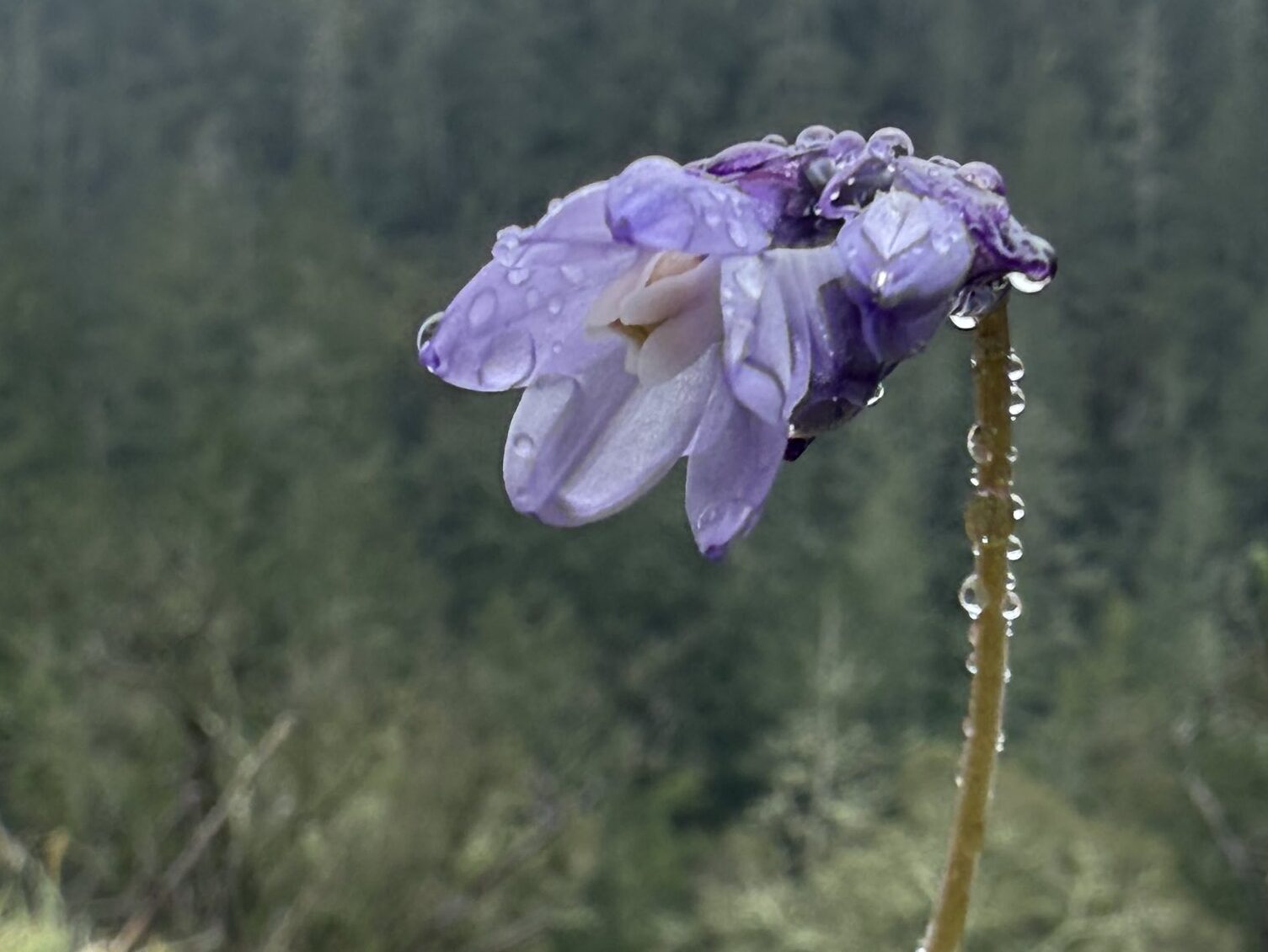
Blue dick wildflower (Depterostemon capitatus), photo courtesy of Rachel Hallaway
Bald Mountain Trail
The Bald Mountain Trail is a road that was once asphalt-paved and is now partially paved with sections of broken or missing pavement. Flowering plants currently blooming along the trail include hillside gooseberry (Ribes californicum, shown above), California bay laurel (Umbellularia californica), common manzanita (Arctostaphylos manzanita), hoary manzanita (Arctostaphylos canescens), nightshade (Solanum xanti), Fremont’s death camas (Toxicoscordion fremontii), milk maids (Cardamine californica), canyon nemophila (Nemophila heterophylla), California buttercup (Ranunculus californicus), canyon sweet pea (Lathyrus vestitus), and orange bush monkeyflower (Diplacus aurantiacus).
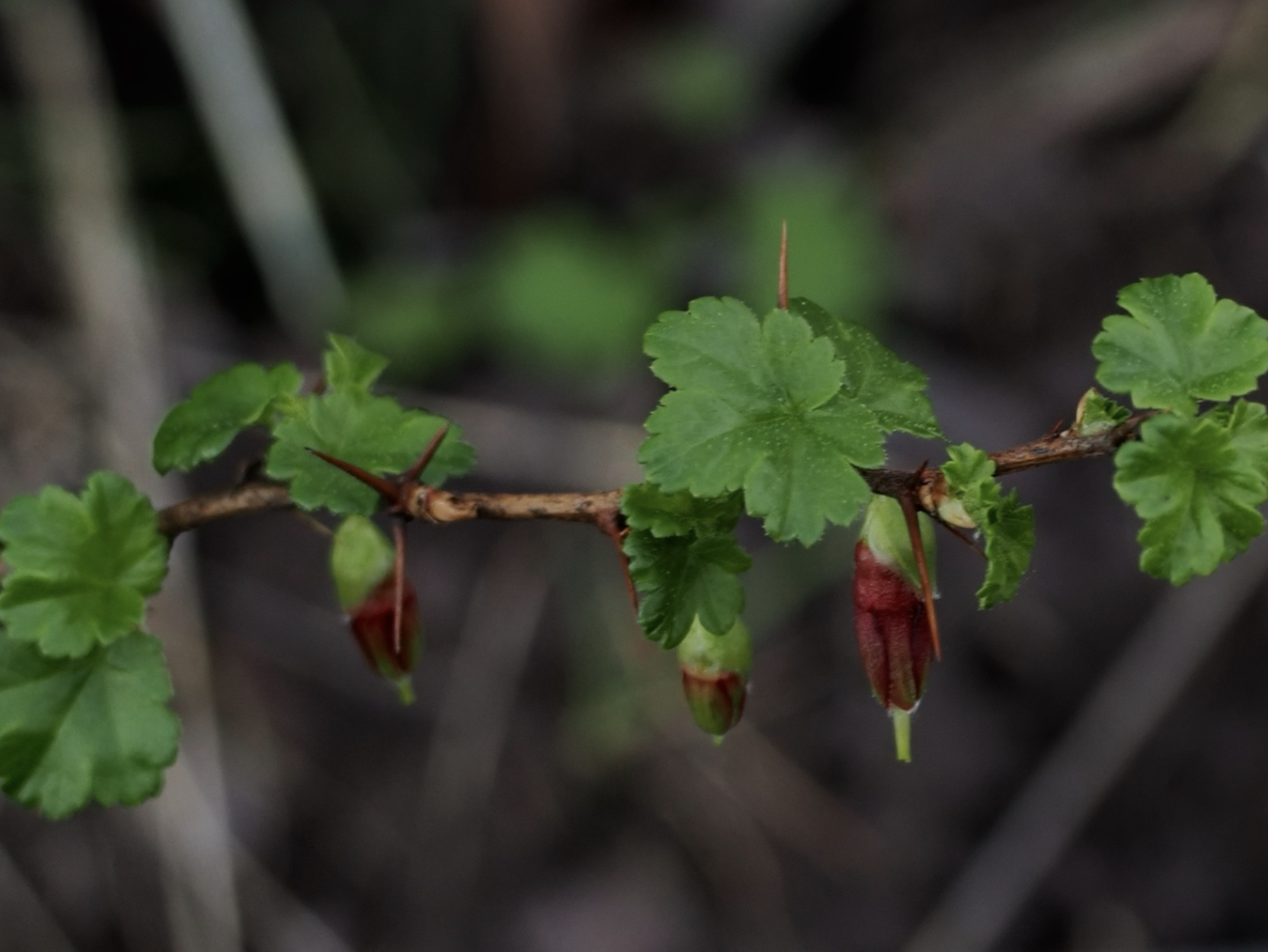
Hillside gooseberry (Ribes californicum), photo courtesy of Jim Webb.
High Ridge Trail
The High Ridge Trail is well graded (it’s a natural surface road) and in good condition, although steep sections on the way down to Red Barn at the north end can be slippery when muddy. Flowering plants currently blooming along the trail include royal delphinium (Delphinium patens, shown above), California bay laurel (Umbellularia californica), common manzanita (Arctostaphylos manzanita), hoary manzanita (Arctostaphylos canescens), hairy ceanothus (Ceanothus oliganthus), nightshade (Solanum xanti), warrior’s plume (Pedicularis densiflora), western thistle (Cirsium occidentale), milk maids (Cardamine californica), canyon nemophila (Nemophila heterophylla), California buttercup (Ranunculus californicus), blue buttons (Adilenia grande), canyon sweet pea (Lathyrus vestitus), and orange bush monkeyflower (Diplacusaurantiacus).
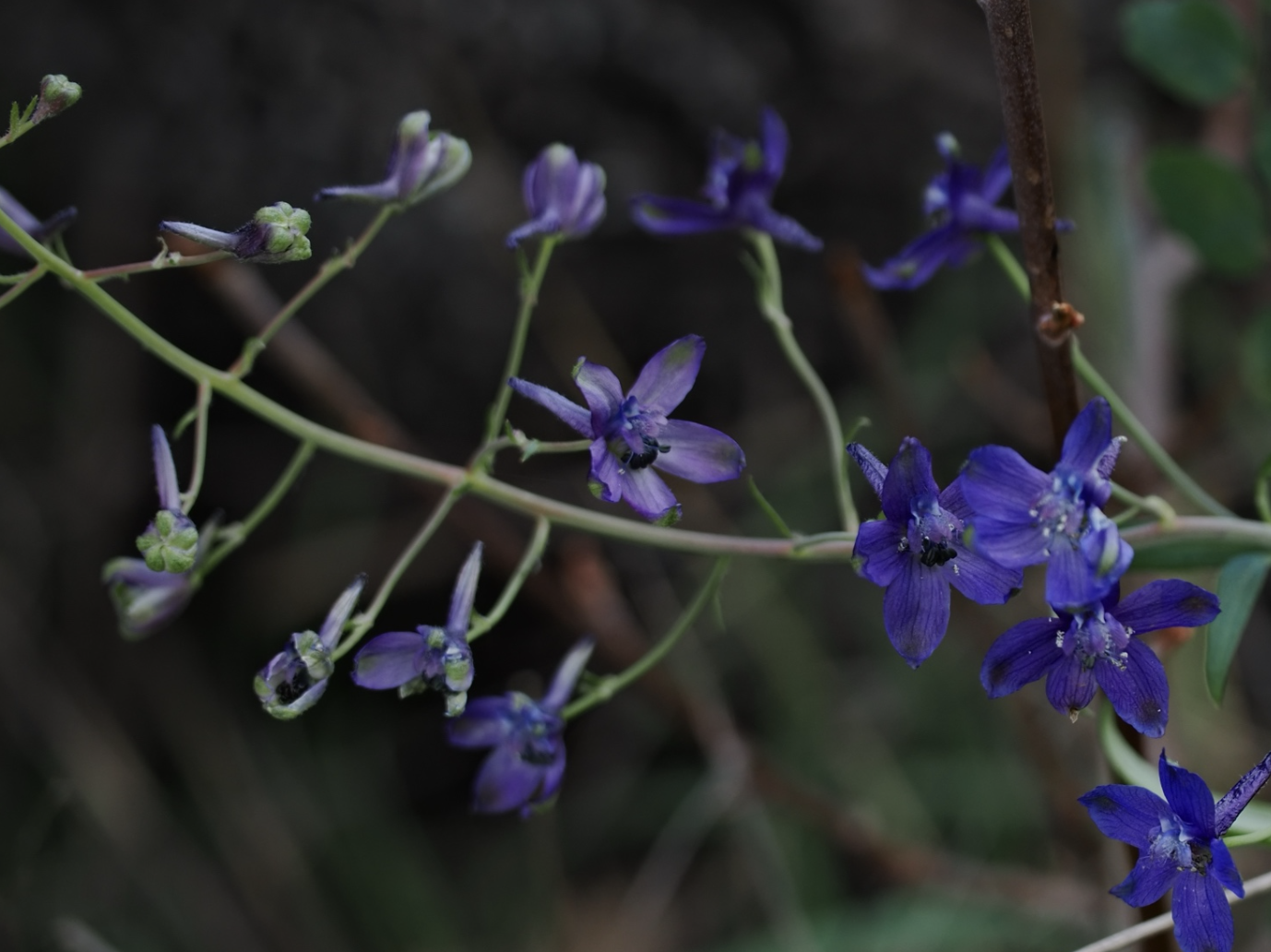
Royal delphinium (Delphinium patens), photo courtesy of Jim Webb.
Goodspeed & Nattkemper Trails
I walked the entire Goodspeed Trail and about 1 mile of the Nattkemper Trail. Both are well graded and in good condition, although steep sections may require scrambles over rocky outcrops on the Nattkemper Trail and crossing Golden Creek on the Goodspeed Trail may be hazardous any time of year due to very slick serpentinite rocks. Flowering plants currently blooming along the trails include Kellogg’s monkey flower (Diplacus kelloggii, shown above), yarrow (Achillea millefolium), blue buttons (Adelenia grande), Texas paintbrush (Castilleja foliosa), blue dicks (Dipterostemon capitatus), checker lily (Fritillaria affinis), ground iris (Iris macrosiphon), lace parsnip (Lomatium dasycarpum), California buttercup (Ranunculus californicus), canyon sweet pea (Lathyrus vestitus), silver lupine (Lupinus albifrons), orange bush monkeyflower (Diplacus aurantiacus), Fremont’s death camas (Toxicoscordion fremontii), California popcorn flower (Plagiobothrys collinus), and fringe pod (Thysanocarpus curvipes).
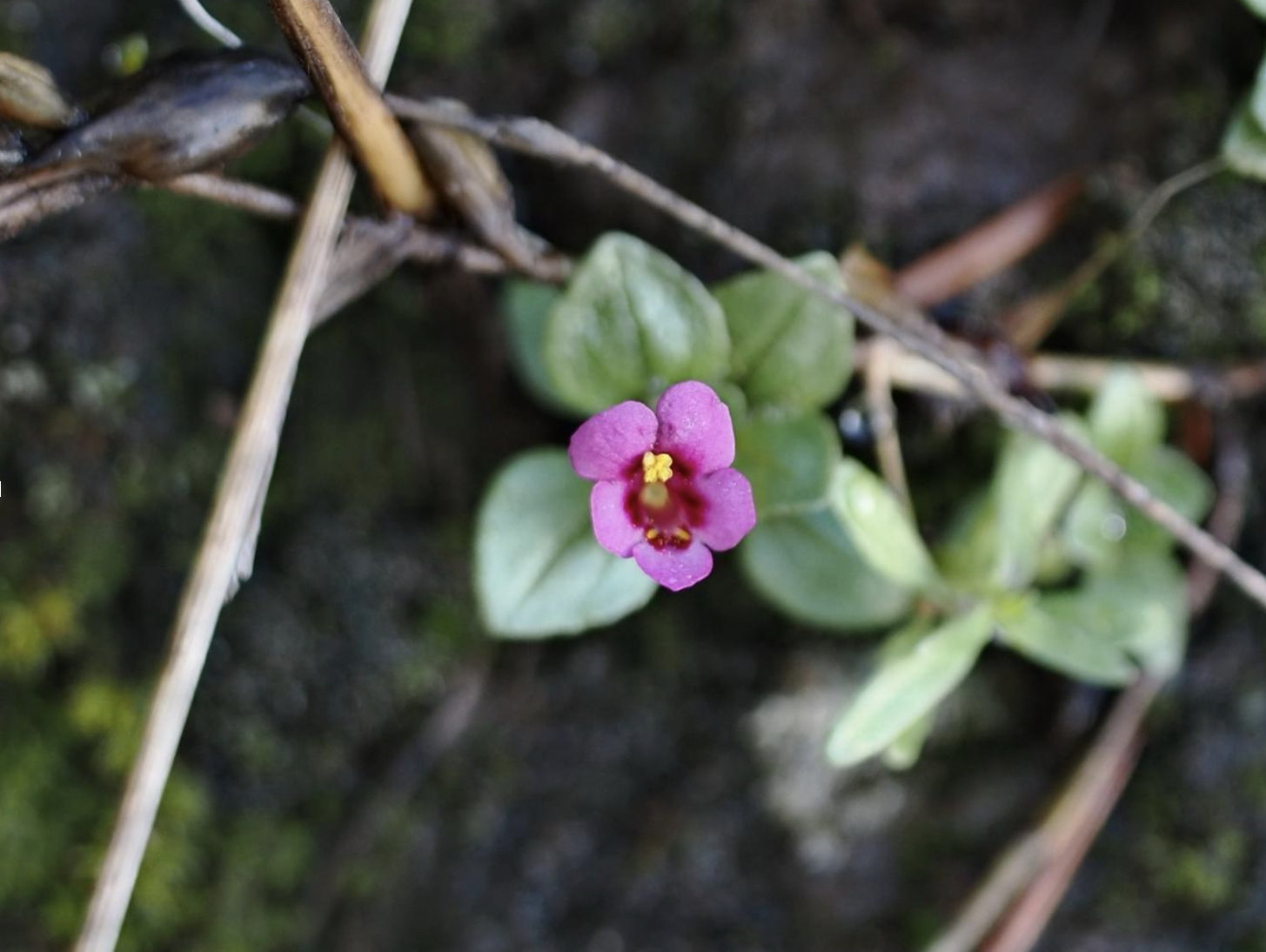
Kellog’s monkey flower (Diplacus kelloggii), photo courtesy of Jim Webb.