
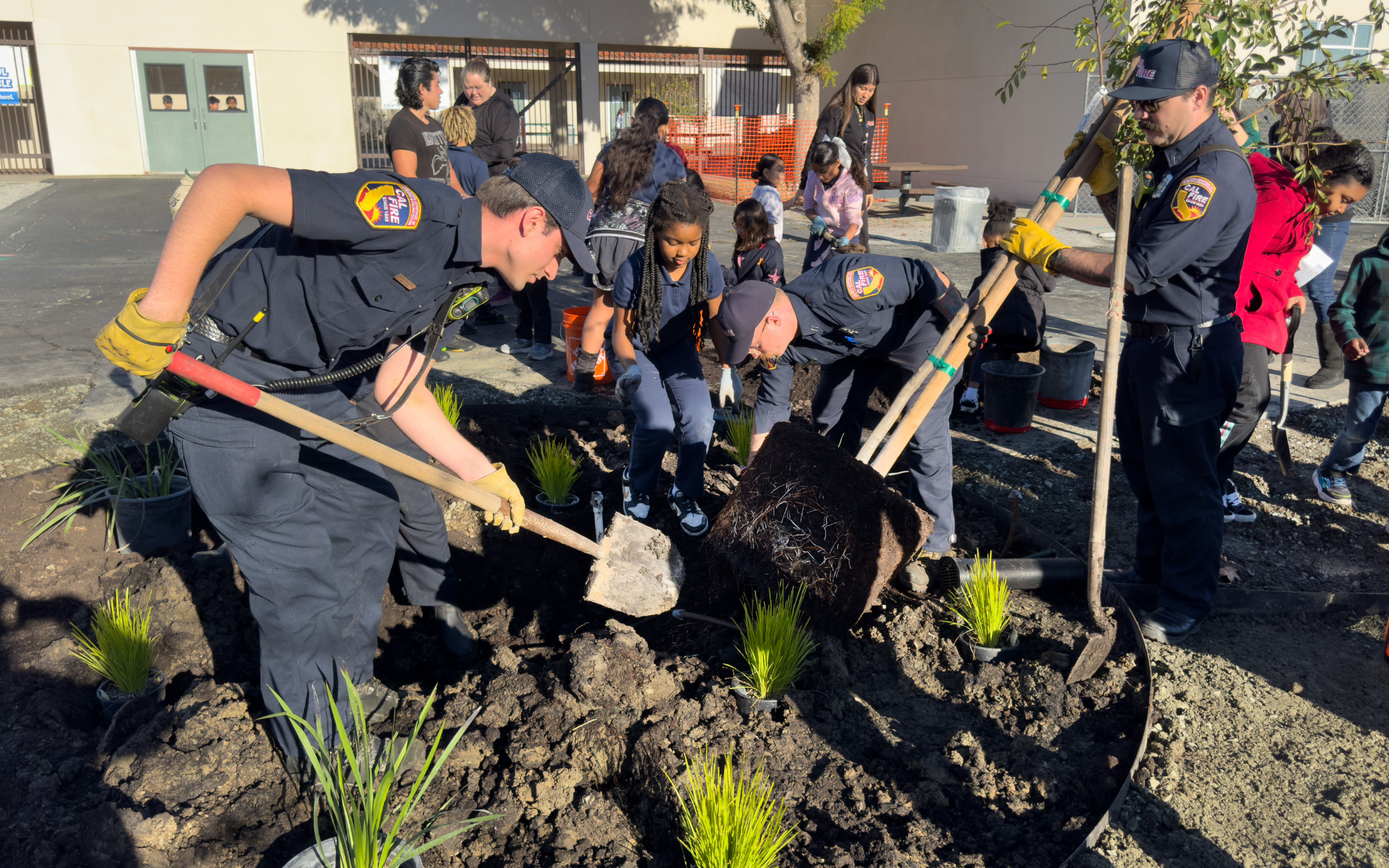
Evan Jones of CAL FIRE assists students of Stoneman Elementary School in blending soil, compost, and biochar to amend the tree and shrub plantings. Photo by Raymond Baltar.
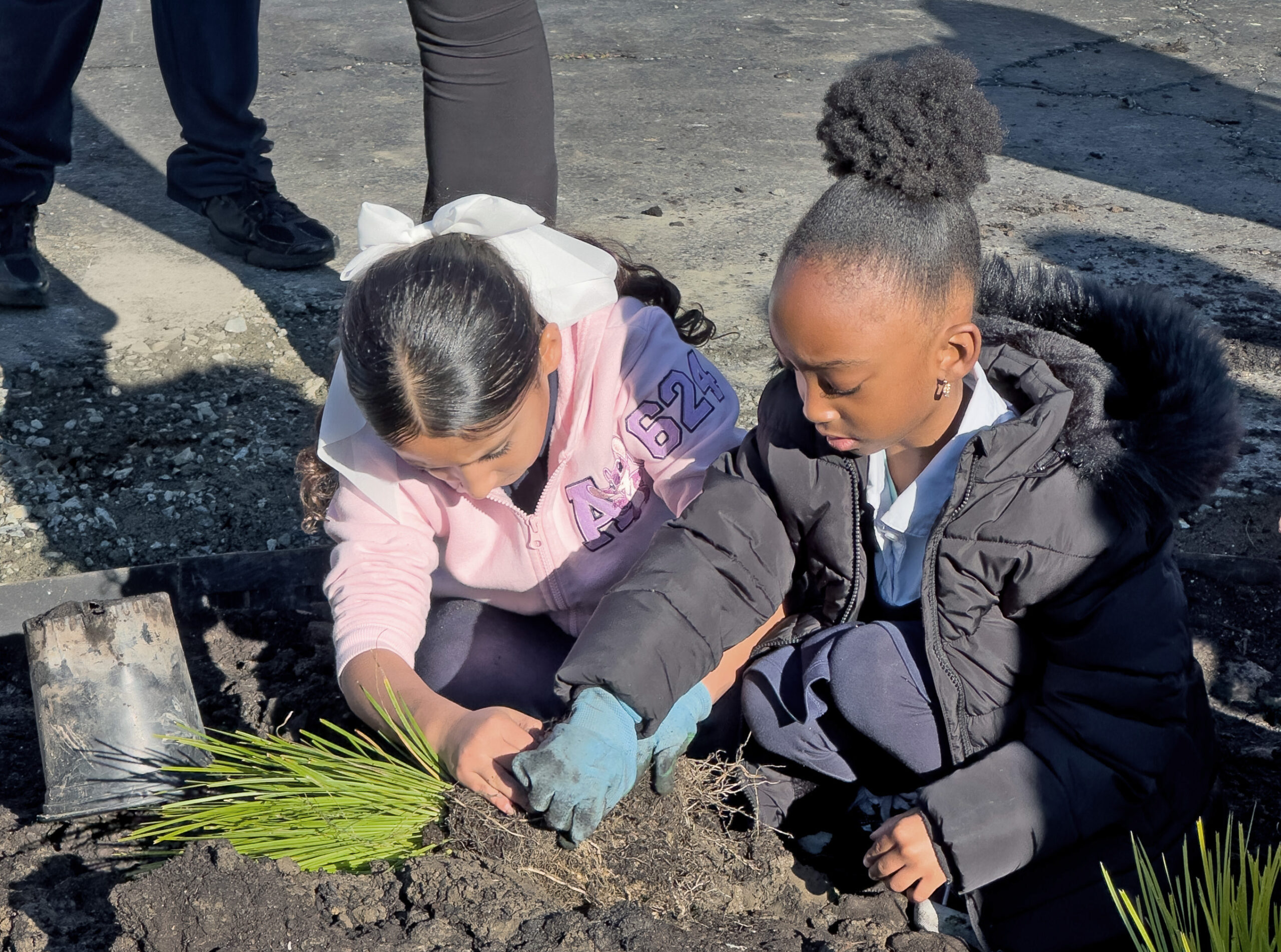
The Green Schoolyards Project continues to move from vision to reality, with visible progress now underway at Stoneman Elementary School in Pittsburg. In November, Sonoma Ecology Center staff joined students, school leaders, and construction partners for a tree and shrub planting day as part of the school’s green schoolyard construction. Twenty-eight student representatives—one from each kindergarten through fifth-grade class—planted alongside CAL FIRE staff, district and school employees, and crews from Valley Construction and Marina Landscaping, marking an important milestone in transforming the campus into a cooler, more welcoming place to learn and play.
The Stoneman Elementary project is funded through a $1.5 million grant supported by the USDA Forest Service Urban and Community Forestry Program, made possible by the federal Inflation Reduction Act and administered by CAL FIRE’s Urban and Community Forestry Program. The Pittsburg Unified School District’s proposal was the only project in Northern California selected for construction funding in the most recent round. Improvements include shade trees, natural play and seating areas, and a shaded outdoor classroom designed to reduce heat stress while expanding opportunities for outdoor learning in an underserved community.
Environmental education is central to this work. Sonoma Ecology Center is developing and delivering hands-on lessons for grades two through five that connect students directly to their schoolyard environment and build long-term environmental literacy and stewardship. As Matthew Belasco, Director of Maintenance, Operations, and Transportation for Pittsburg Unified School District, shared, “My hope is that this will continue to foster environmental stewardship from these scholars. These scholars are going to want to continue to push the envelope and see more projects like this happen in Pittsburg. And when we get the scholars engaged, as we all know, they are the future of the world. And they will help make this world a better place, by supporting and having ownership of projects like this.”
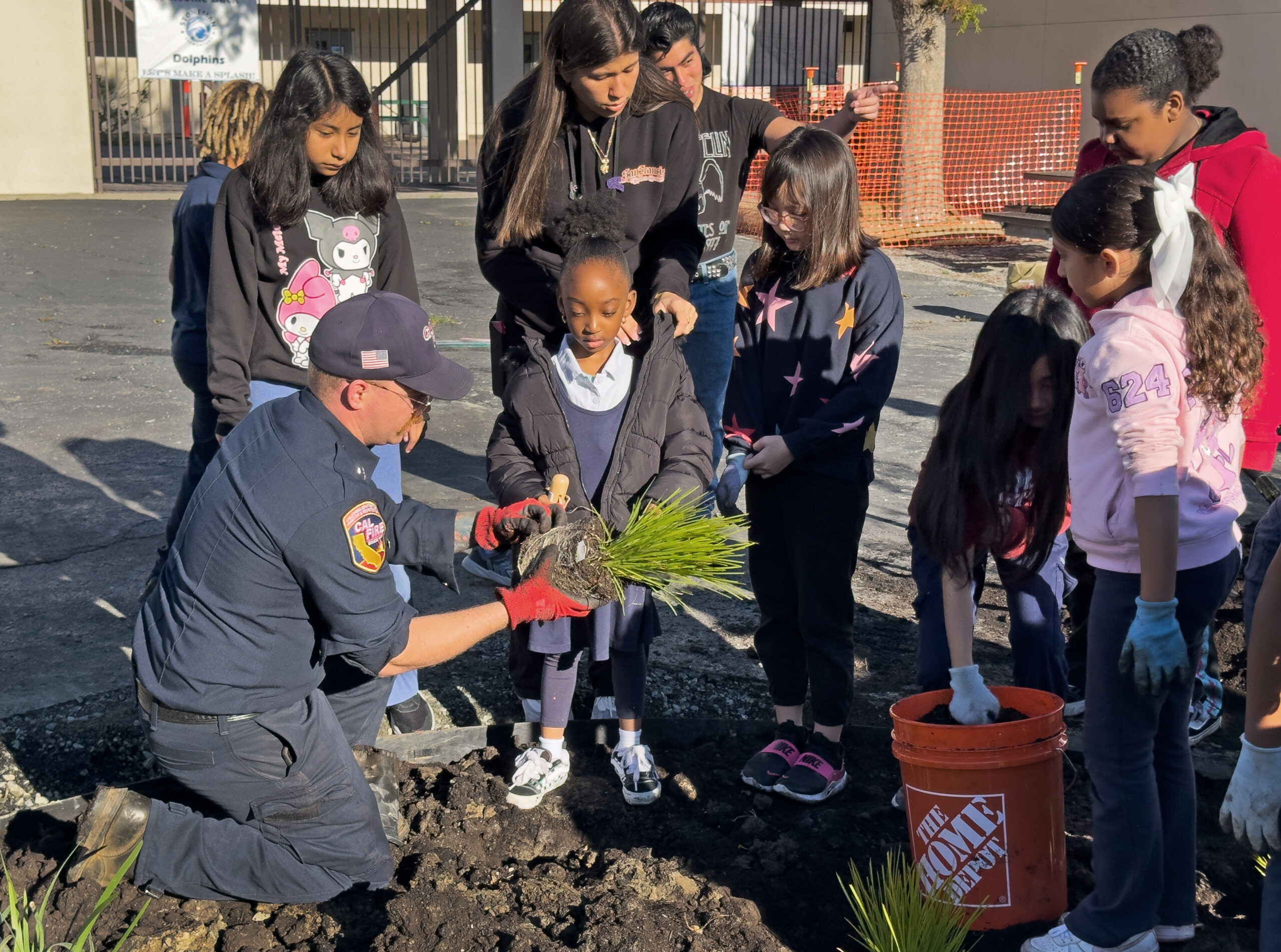
Photos by Raymond Baltar
What’s next for the Green Schoolyards project? This February, Sonoma Ecology Center’s Education Team—led by Education Program Manager and Chairperson of the Sonoma County Environmental Education Collaborative (SEEC), Tony Passantino—returned to Stoneman Elementary alongside SEC Biochar Program Manager Raymond Baltar, who has served as the project lead for SEC’s Green Schoolyards work. Together, they will collaborate with Stoneman faculty and staff to further develop an environmental education curriculum that complements the new outdoor learning space, bringing the project full circle and ensuring it fulfills both its physical and pedagogical purpose. “Stoneman Elementary School’s new outdoor classroom creates a powerful opportunity to bring field trips directly onto school campuses,” says Passantino. “Outdoor education doesn’t have to be far from school, it can happen right in students’ own backyards. By partnering closely with teachers and staff at Stoneman, we’re excited to adapt our long-standing Watershed Education curriculum to their newly planted campus. Now more than ever, environmental literacy is an essential pillar of education, helping students understand their roles as active stewards of the places they live.”
Sonoma Ecology Center is proud that our staff’s hard work and expertise are being sought after and are making a meaningful impact for students across the greater Bay Area—and we recognize this collaboration as a valuable learning experience that strengthens our programs overall. As funding is secured, we look forward to applying these lessons to help enrich schoolyards right here in Sonoma Valley—extending the same value and inspiration our Watershed Education Program delivers in indoor classrooms throughout Sonoma County into vibrant, nature-rich outdoor learning environments.
Now more than ever, environmental literacy is an essential pillar of education, helping students understand their roles as active stewards of the places they live.
—Tony Passantino, Education Program Manager
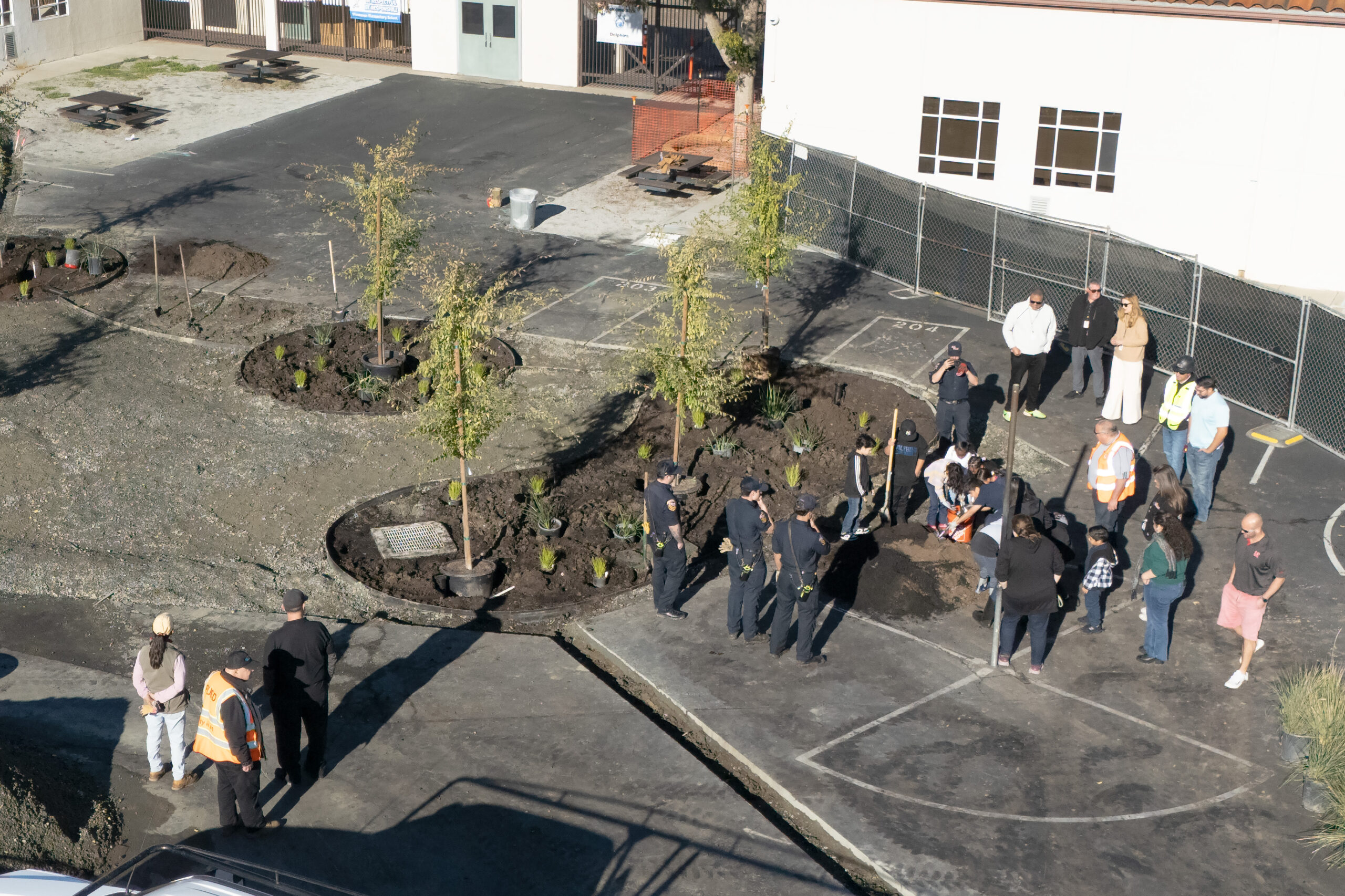
Photo by Raymond Baltar