
Deadline for public comment: February 18
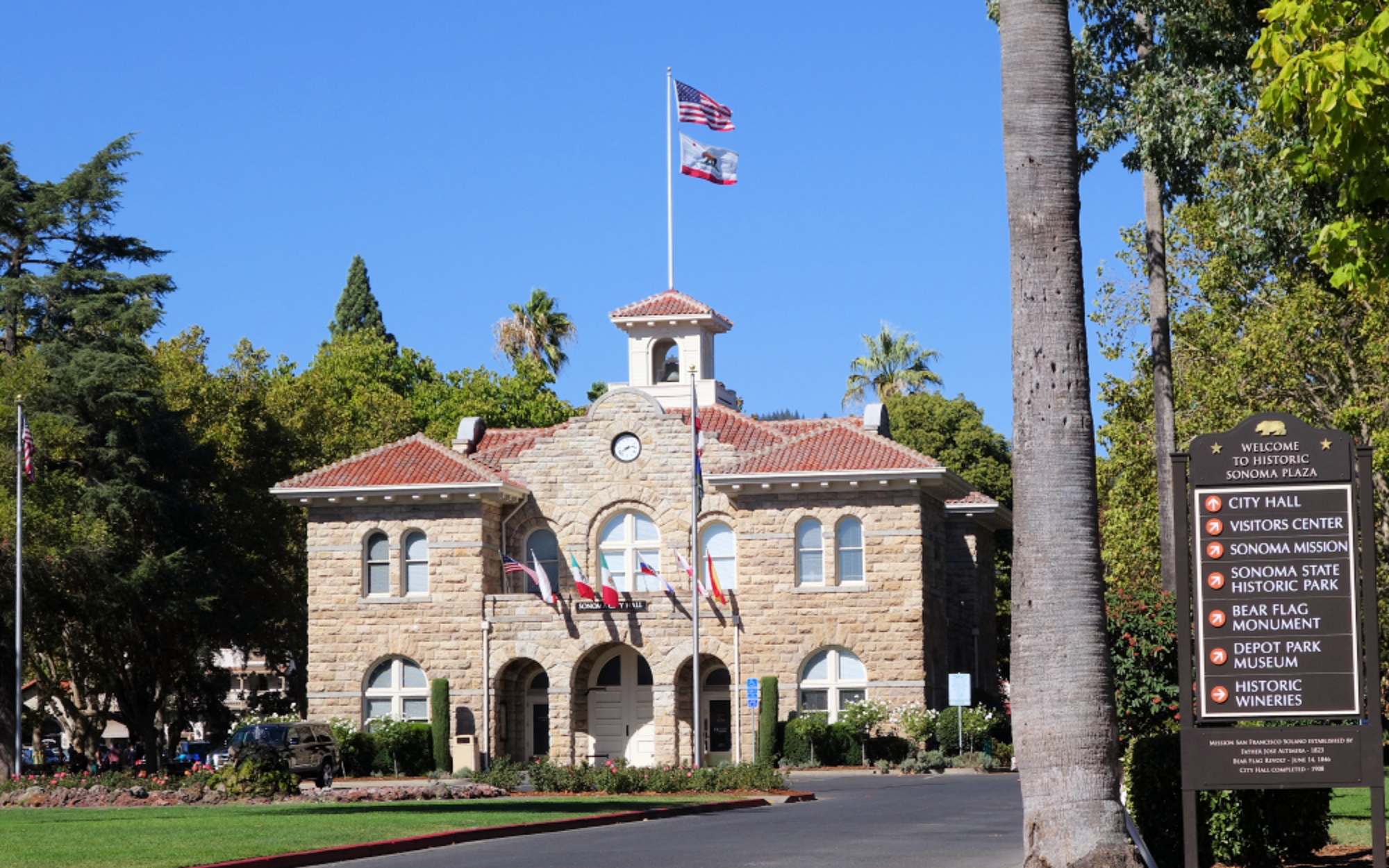
Sonoma Valley residents have a chance to influence the City of Sonoma’s General Plan for the next 20 years, before the public comment period closes on February 18, 2026. The General Plan controls how land can be used, how streets and trails develop over time, how many parks we have, and much more.
In partnership with civic-minded organizations and individuals in our Sonoma community, we have carefully reviewed the General Plan and prepared a set of talking points that anyone can use. These talking points are intended as a resource, and we encourage you to adapt them to reflect your unique voice and perspective.
At the bottom of this page, you will find a list of key decision-makers to email your comments to, as well as an option to draft an email with the following talking points with a single click.
Contributors to the following talking points include Sonoma Ecology Center, Valley of the Moon Garden Club, and Sonoma Valley Collaborative.
Key links
— Land Use element text (what uses are allowed on which parcels)
— Circulation element text (includes trails)
Overall, we would like to see a General Plan that includes more clear, actionable commitments about goals that most residents care about: greening the city, trail connectivity, and housing. Find our individual talking points that relate to each of these issues below.
Expand and protect the walkability and bikeability of our city.
We want to see a commitment to expanding and protecting pedestrian and bike connectivity in Sonoma. Currently, there is no map, and no policy with teeth. Policy CIRC 3.6 comes closest, but there is not a proposed Action to implement it. Sonoma’s economy and identity depend on its walkability, landscapes, and environmental quality.
We ask for a policy or policies saying that:
- The City will not reduce or cut off current or future connectivity and instead will proactively seek every opportunity to expand and protect connectivity. City decisions by Council, staff, and commissions will expand and protect connectivity.
- The City will adapt the trail network when conditions or land uses change.
- No land use designation will prohibit bike/pedestrian trails.
Commit to a greener, shadier, safer City.
Shade corridors, expanding the tree canopy, greenways, and safe walking and biking routes are not amenities—they are necessities. We ask for a policy saying that these features are essential civic infrastructure and providing a clear, quantitative commitment to expanding shade corridors and the urban tree canopy.
Tourism favors green, pedestrian-friendly cities. Strong policies unlock state and federal grant funding for climate and infrastructure projects.
We ask for a policy stating that the City will proactively seek and positively respond to public-private partnerships so that livability features on private land become part of the City’s purview.
We ask for Action to implement CIRC 3.6.
Reduce flooding and increase groundwater recharge.
The Cuneo property (577 Lovall Valley Road) is proposed to change from Agriculture to Rural Residential. Sonoma Water and Sonoma Ecology Center have identified this as the highest priority parcel for reducing flooding, upstream of the City. Its land use designation should reserve the possibility of allowing portions of the property to flood.
Show that we want more homes that people can afford.
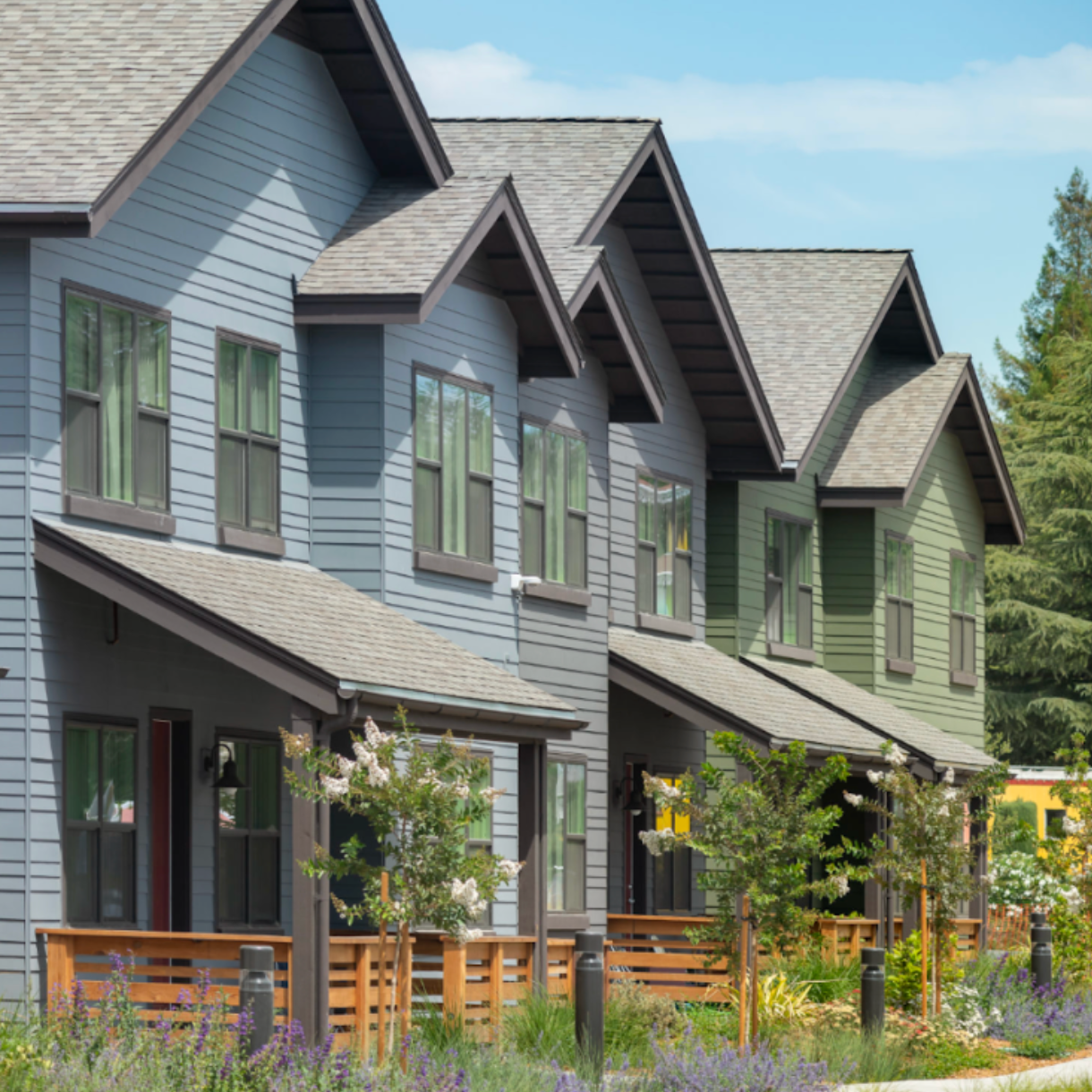
It’s great that a new Affordable Housing Overlay is proposed, for bigger lots where projects like Alta Madrone on Broadway could be built (if and when the owner wants to–there’s no requirement), but it only applies to five parcels. We need the City to “grow up” in most of its commercial areas like along Broadway and Napa St. The Affordable Housing overlay should be applied to any larger lot that’s zoned mixed use, Sonoma mixed use, commercial, or gateway commercial, plus school sites. (p. LU-7 in Land Use element)
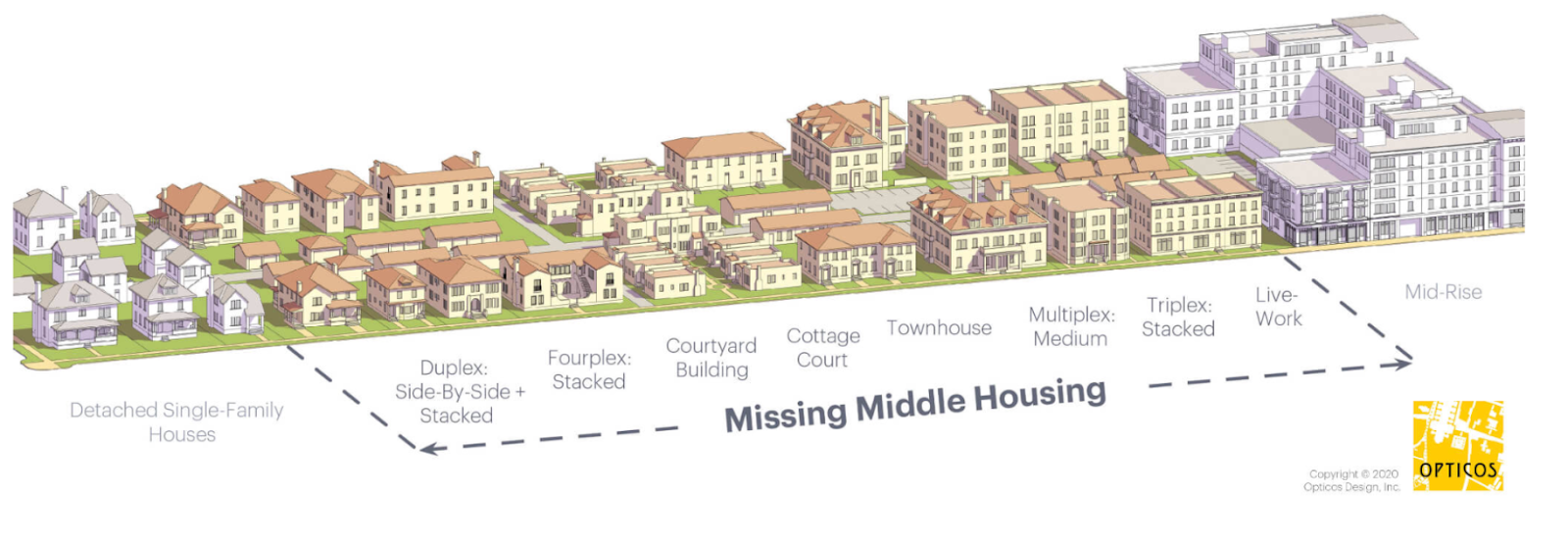
We’re pleased that the City is committing to “allowing and facilitating the development of duplex, tri-plex, and four-plex housing within single family residential neighborhoods” (LU 2.5 and LU-2f), but this policy should go further. We ask that this goal and policy extend to up to 10 units on larger parcels that can do so while still complying with the City’s many other requirements, consistent with SB10. We would like to see more action-oriented and committed language in place of vague language like “allow” and “facilitate”. We ask that this policy explicitly commit to a ministerial process.
Real Commitment Needed
We ask that the City demonstrate its commitment to the above impact areas by using language that holds more weight. Change words like “encourage”, “consider”, and “as feasible” to “shall”, “require”, and “will”. Examples: LU 2.7, LU 4.9, LU 4.15.
Additional comments:
- LU-3 policies seem redundant, unclear, and not objective. Please define “compatibility”. What metrics are used to determine it? Who decides that? Similarly, please define “community character” for LU-4.
- Housing Opportunity designation (p. LU-5) says “Uses other than housing and accessory uses are not allowed.” Allowed uses should include those sometimes necessary to make a multifamily project function: childcare, elder care, social services offices, etc.
- Montini Way parcels are mapped as Rural Residential, but this does not match their actual dwelling units/ac (1 du on lots 0.08-0.2ac). Is this an error?
- The orange colors used for residential designations on the draft map are too hard to tell apart.
- The vernal pool mitigation site at the south end of Cox St should be included in the open space overlay.
- LU 2.3: Please change the last few words to “open space and agricultural preservation”.
- The background on the Urban Growth Boundary (p. LU-8) omits a key provision: that the City cannot annex land beyond the UGB except for 100% affordable housing projects.
- It’s unclear why some places are mapped as park vs open space overlay versus undesignated. For instance, the bike path is mapped sometimes as park, and sometimes undesignated. Please designate it all as open space overlay.
Make your voice heard before February 18!
Share this article and include your comments on social media, and email your public comment to key decision-makers by February 18, 2026.
Click below to generate an email draft to key decision-makers that includes our full list of talking points.
Submit your public comment to all of the following:
[email protected]
City Council members: [email protected]
City Manager David Guhin: [email protected]
Planning Director Jennifer Gates: [email protected]
Parks & Recreation Director Dave Jahns: [email protected]
Parks, Recreation, & Open Space Commission Chair Charles Tolbert: [email protected]
Planning Commission: [email protected]
Planning Commission Chair Matt Wirick: [email protected]
Sonoma Valley Citizens Advisory Commission Chair Matthew Dickey: [email protected]