
Photo courtesy of Edi Ramírez
This news article was written by Isabel Beer and published by the Sonoma Index-Tribune on November 6.
In the rolling foothills above the Sonoma Valley, crews are clearing thick brush, overgrown grasses and dead tree limbs as part of the first phase of a nearly 1,200-acre wildfire prevention project intended to create a buffer—in the event of catastrophic wildfire—between the mountains and communities where about 33,000 people live.
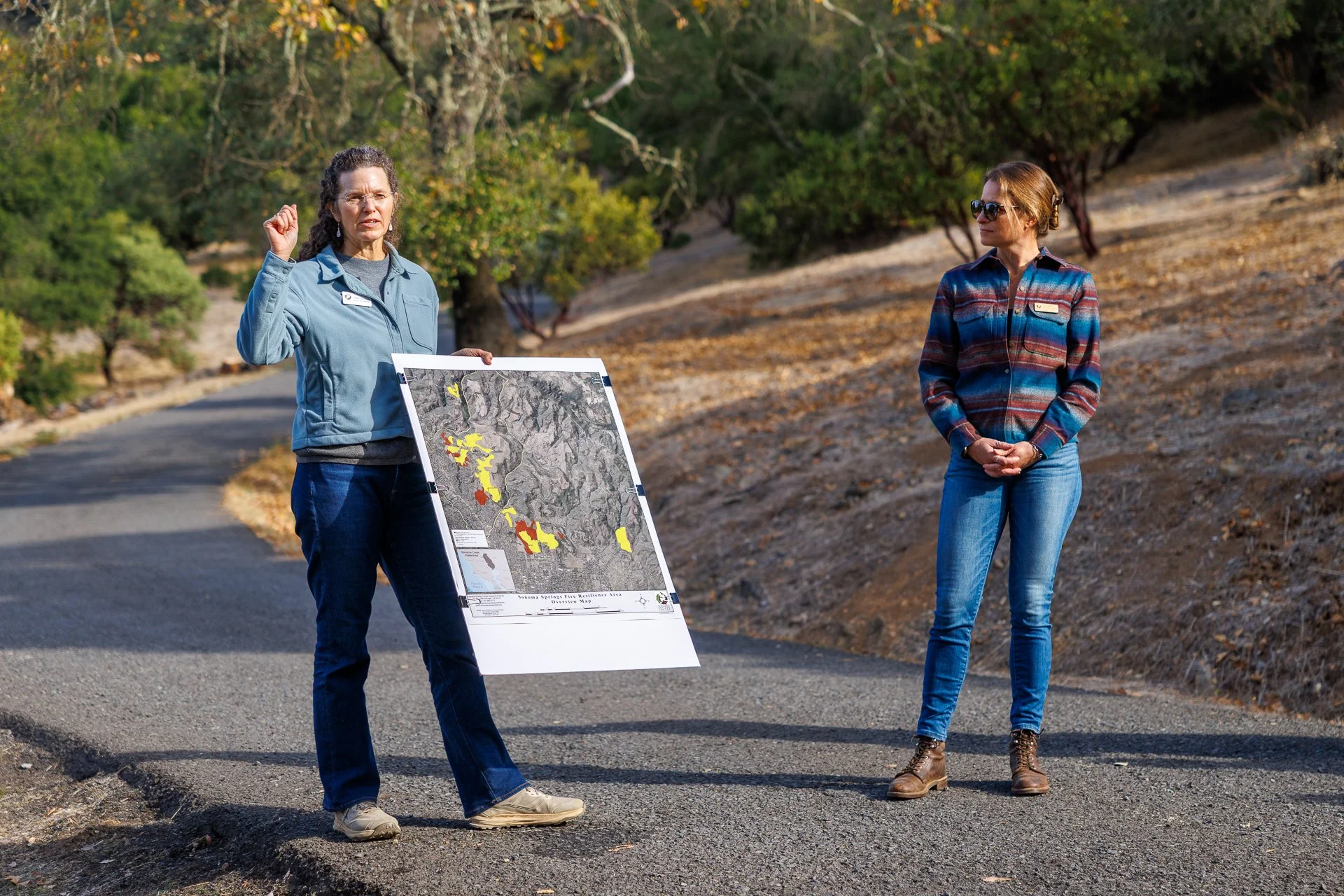
The Sonoma Springs Fire Resilience Area is a long-term effort by the Sonoma Ecology Center and Sonoma Valley Fire District to reduce the vegetation that could fuel a wildfire along the western slopes of the southern Mayacamas Mountains.
Although abatement work has been planned and approved across nearly 1,200 acres, funding is currently in place for the first 55-acre phase, known as Western Gravel Project. Organizers are seeking millions of dollars in additional grants to expand the work across neighboring properties.
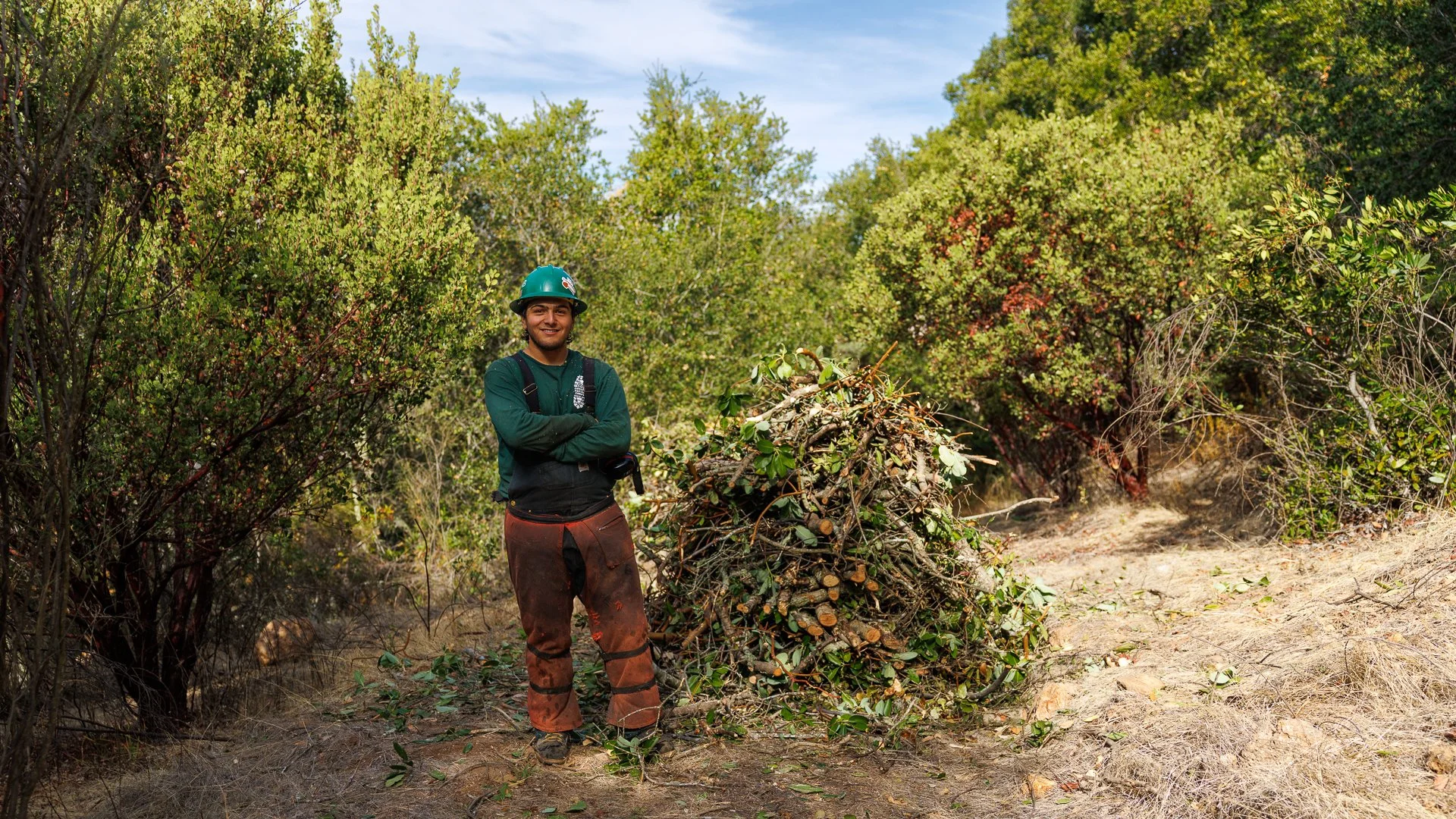
The goal is not to clear the hillsides entirely, but to remove dense brush, invasive plants and dead vegetation while preserving healthy trees. Organizers hope the work will slow the spread of future wildfires, give firefighters more room to operate and improve the health of the surrounding landscape.
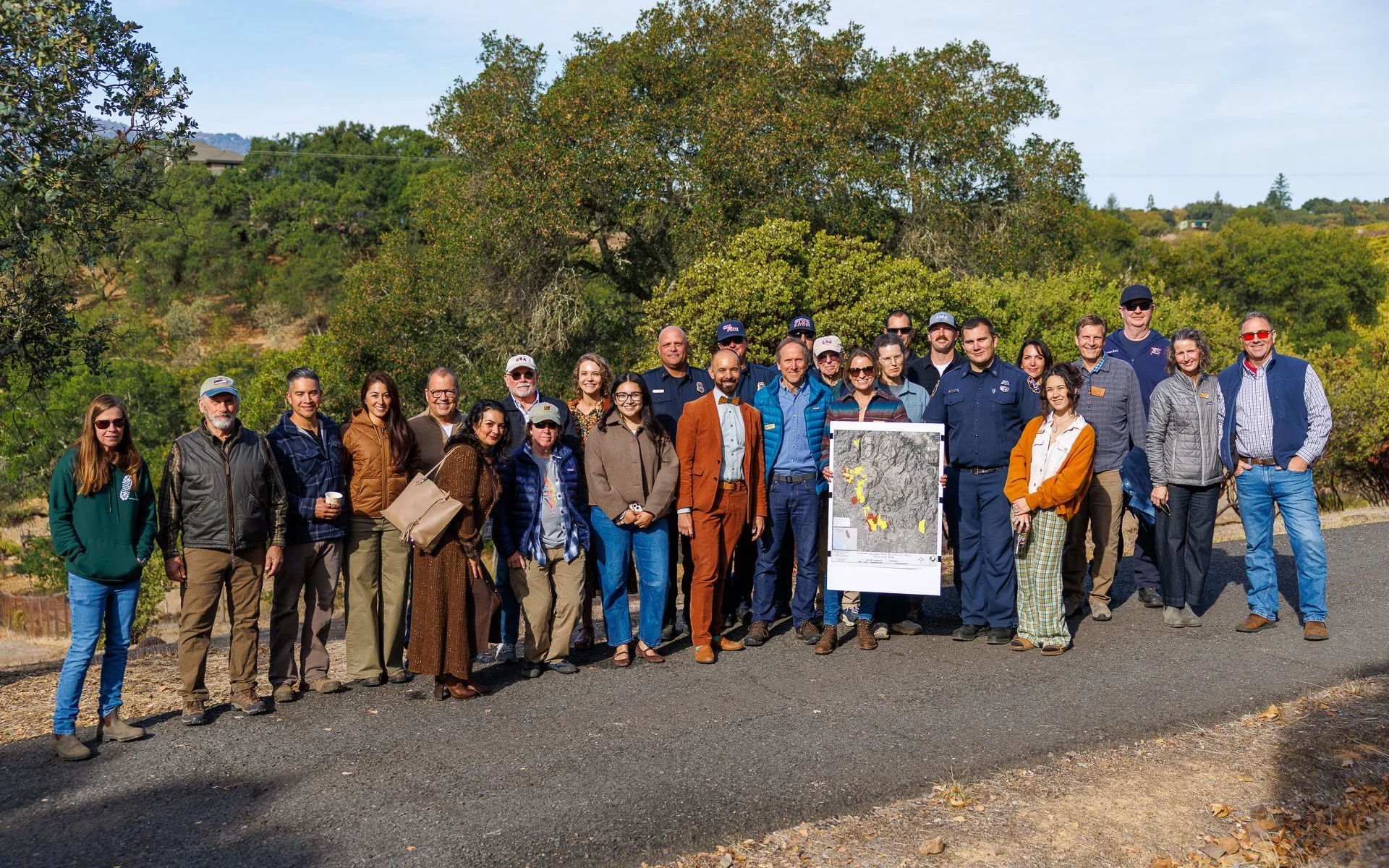
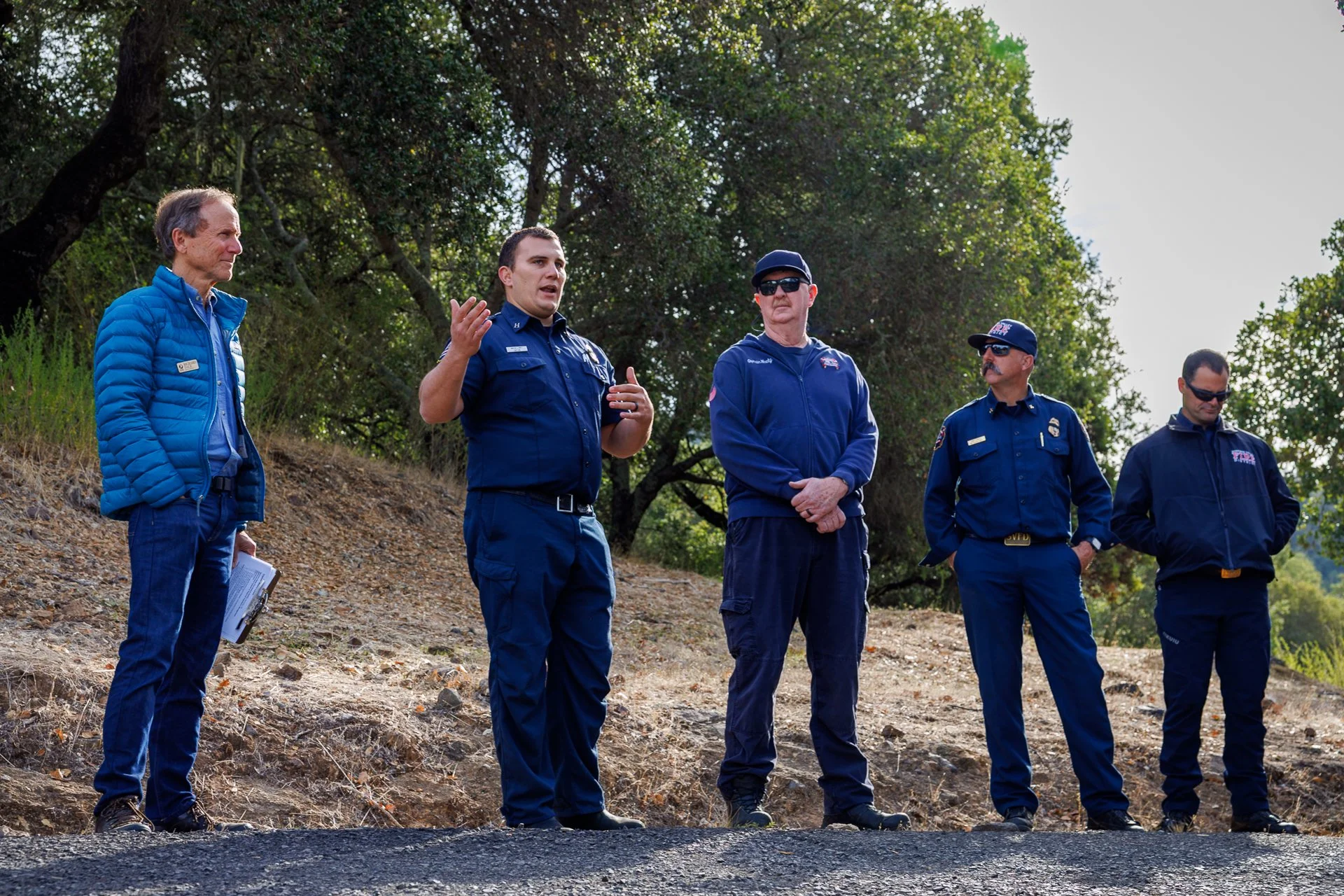
Local officials, firefighters, environmental organizations and residents gathered Thursday, Oct. 29, to tour the Western Gravel property and see the work underway.
Photos courtesy of Edi Ramírez
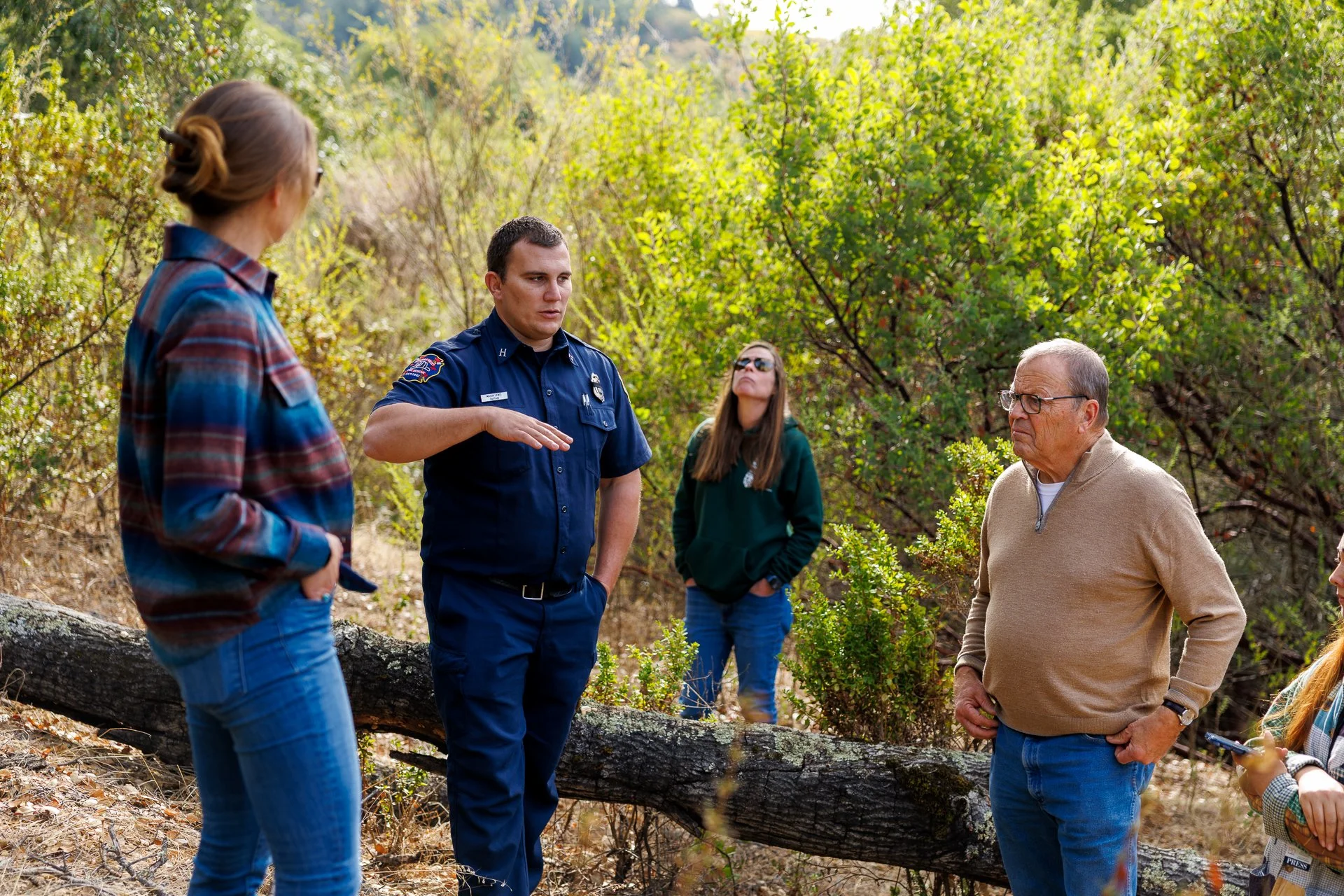
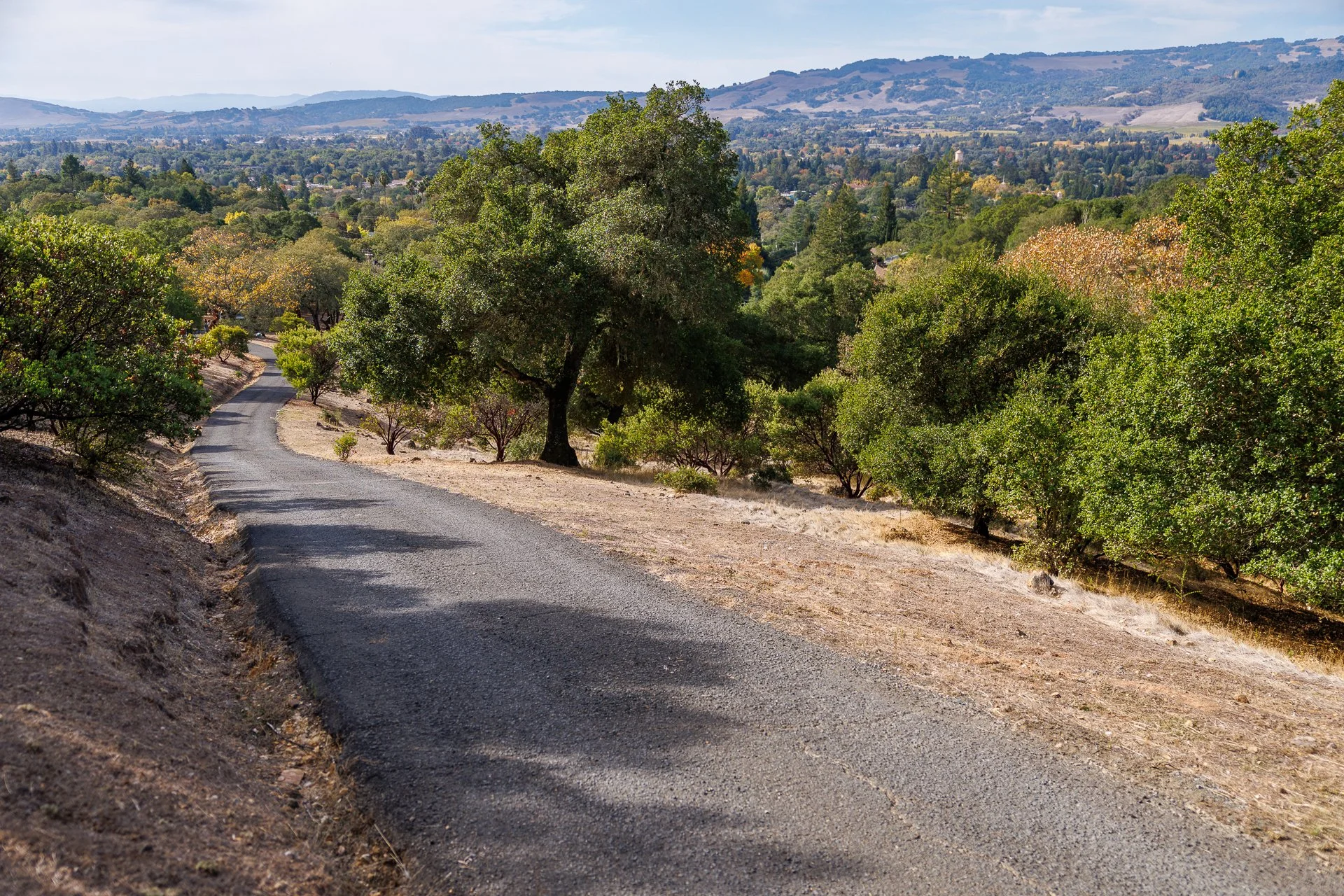
Sonoma Valley Fire District Capt. Mason Lewis, the district’s regional vegetation management coordinator, said the need for the project is apparent from the hillside overlooking the Springs.
“When you get up on this hillside and you look down, you can see the densely populated areas right adjacent to heavy vegetation and steep terrain,” Lewis said. “This project will never remove the risk of wildfire. That’s not the intent of it, and it’s really, frankly, not possible. Fire is part of California.”
The project area sits above Fetters Hot Springs, Agua Caliente, Boyes Hot Springs, El Verano and the city of Sonoma, immediately uphill from an estimated 10,000 homes. Organizers say the work could help protect about 33,000 residents.
The entire area is classified by Cal Fire as a very high fire hazard severity zone. Much of the landscape has not burned in more than 80 years, although portions were affected by fires in 1964 and 2017, according to the Sonoma Ecology Center.
Because much of the landscape has not burned or undergone significant vegetation clearing in decades, dry grasses, dead branches and other flammable vegetation have accumulated across the hillsides. That buildup could allow a wildfire to spread rapidly and become more difficult to contain, potentially threatening the densely populated Springs communities directly below.
Regular vegetation clearing is intended to reduce the amount of material available to fuel a fire and slow its spread.
Lauren Claussen, restoration program manager for the Sonoma Ecology Center, said the project grew out of years of discussions about how to reduce wildfire risks beyond individual properties and roadsides. “It’s great to do roadside treatments. It’s really good to improve access and egress in the event of an emergency,” Claussen said. “But really, what these hillsides need before another fire sweeps through … is landscape-scale treatments.”
During Oct. 29 tour, Claussen pointed to sections of the hillside where crews had removed thick brush and trimmed lower branches from oak trees. Nearby, untreated areas remained densely covered with manzanita, dead tree limbs and invasive Scotch broom.
“This is very indicative of what a lot of this Springs Fire Resilience Area looks like before treatment,” Claussen said. “It’s a lot of invasive species. It’s a lot of manzanita. It’s a lot of bush live oak, and everything is growing very, very densely together.”
That dense growth creates opportunities for flames to spread from grasses and shrubs into the lower branches of trees and eventually their canopies, potentially allowing a wildfire to grow more intense and spread more rapidly across the hillside.
Rather than clearing the hillside of trees and shrubs entirely, the approach is intended to replicate some of the effects of lower-intensity fires that historically helped prevent vegetation from becoming so densely packed. Organizers hope the treated areas will be better able to withstand future wildfires while remaining healthy ecosystems.
Crews from Conservation Corps North Bay, the Sonoma Ecology Center and Sonoma County’s vegetation management program are working on the first phase, which covers about 55 acres of steep terrain containing oak woodland, chaparral and some grassland near Los Robles Drive in Sonoma.
Claussen said county and Conservation Corps crews are expected to work on the property weekly or every other week through the end of 2026, with most of the initial vegetation clearing completed by then.
Photos courtesy of Edi Ramírez
Sonoma Ecology Center crews are expected to completed the work by June 2027, when the current grant funding period ends.
The work is expected to cost approximately $400,000, Claussen said, and includes a $200,000 grant awarded to the Sonoma Ecology Center by Sonoma County earlier this year and additional matched support through participating organizations.
The county grant was part of a $1.51 million package approved by the Board of Supervisors in January for 10 wildfire prevention projects.
The funding comes through the county’s Vegetation Management Grant Program, established in 2020 using funds from a multimillion dollar settlement with Pacific Gas & Electric Co. over the 2017 Sonoma Complex fires.
Kim Batchelder, a vegetation management coordinator with Sonoma County Agricultural Preservation and Open Space District, said the work represented the realization of a broader vision for wildfire prevention that began six years ago.
Batchelder said an initiative involving Greenbelt Alliance, the Sonoma Ecology Center and Ag + Open Space began examining a roughly 10.8-square-mile area of the hillside in 2023 to identify opportunities for coordinated wildfire prevention work.
“It showed to us an opportunity to see this mosaic of a landscape that we could try to treat as a collective unit,” Batchelder said. “No one had really done this in this area, and there’s been some hoops and ladders to be able to cross. But we’ve been able to get the work done, and today we’re seeing the realization of the CCMB crews, the Measure H crews.”
Claussen said the Ecology Center submitted three requests under the emergency proclamation, all of which were approved, allowing vegetation work to move forward across the larger project area.
The next challenge is securing enough funding to carry out that work.
Organizers have submitted approximately $9 million in grant proposals for future phases, covering roughly 1,000 to 1,100 additional acres, Claussen said. The applications include requests to state agencies, but the funding has not yet been awarded.
Claussen said work on the next phase could begin in early 2027 if the applications are successful. Otherwise, organizers hope to begin additional work later in the year as funding becomes available.
State Sen. Christopher Cabaldon, who attended the Oct 29 gathering, said he would continue advocating for funding to expand the project.
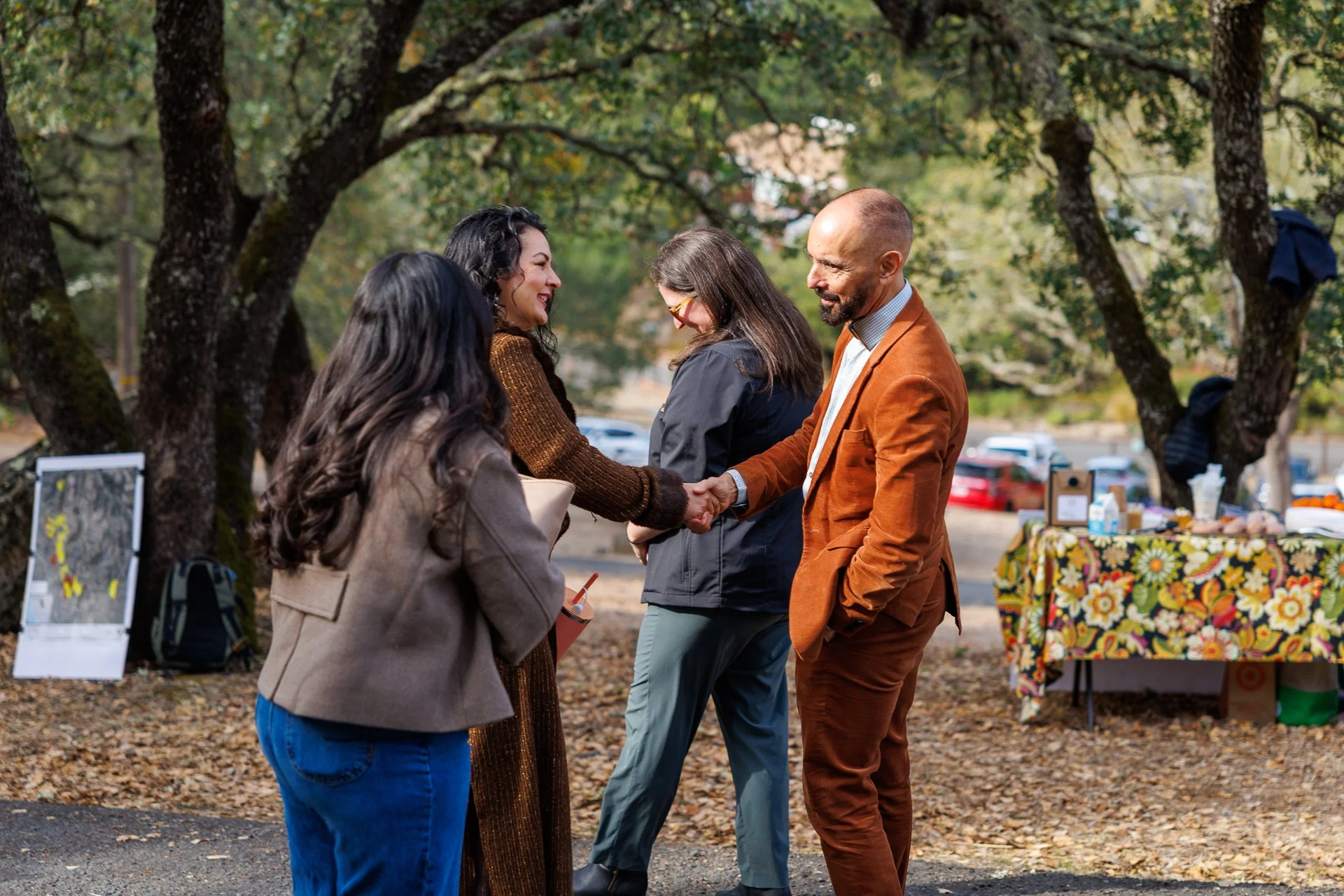
Photo courtesy of Edi Ramírez
“We’re fighting for the grants for phase two alongside you to make sure this happens and beyond,” Cabaldon said.
“Beyond the benefits that that are now obvious, I think, to most of us in terms of public safety and fire protection and resilience, the broader climate resilience, the protection of our natural legacy and habitat around us, but also in so many other ways,” Cabaldon said. “It’s all connected, and so these these systemic investments, this systemic work and collaboration, just like the the fire resilience project, is critical in so many ways.”
The larger project involves 29 private landowners and the city of Sonoma, which owns the Montini Open Space Preserve.
Claussen said the Ecology Center and fire district conducted about 35 property visits during April and May to recruit participants and explain how vegetation would be managed. The involvement of landowners is critical because nearly all of the proposed work would take place on private property.
Claussen said the partnership between the Ecology Center and fire district helped reassure property owners that the goal was to protect both their homes and the health of the landscape.
“We want to help you. We want to help the community,” she said.
Organizers also hope the work will eventually include prescribed burning in suitable areas to maintain the cleared landscape and reduce the need for repeated large-scale vegetation removal.
Claussen said some properties have been identified as possible locations for broadcast burning, in which crews intentionally burn vegetation across a designated area. Other properties, particularly those near homes or on challenging terrain, would be limited to cutting vegetation and burning it in piles.
Lewis said the district has several ways to maintain treated areas, including grazing, continued cutting and prescribed fire.
“We can complete this project on grant funding and say ‘Great, this is wonderful,'” Lewis said. “Well, the thing about vegetation management is it grows back, and then five years from there, we’re back to square one.”
He said maintaining the work over time would require continued participation from landowners rather than relying entirely on new grants.
The Sonoma Ecology Center is also considering ways to improve water retention, protect wildlife habitat and reduce erosion as the project progresses.
Asked about the potential for vegetation removal to increase landslide risks during winter storms caused by El Niño, Claussen said organizers consulted geologists and other specialists to identify unstable areas and plan to perform most of the clearing by hand.
“There’s a couple spots where there is a landslide risk, but in almost this whole area, we plan to do hand treatments,” Claussen said. “So it’s people going out and cutting vegetation. We have a very limited area that we would potentially use, like tractors or heavy equipment, and part of that is because we don’t want to cause erosion.”
Caitlin Cornwall, lead project manager with the Sonoma Ecology Center, added that carefully and intentionally removing vegetation could also help reduce the risk of landslides and erosion by preventing the kind of intense wildfire that could kill trees and leave hillsides unstable.
“A very high severity fire would kill a lot of trees, and that destabilizes the soil,” Cornwall said. “So, in the end, if we have fewer and bigger and healthier, happier trees with big root systems, that’s the most important thing for holding the soil together.”
Future work could include repairing drainage features, planting native grasses in areas where vegetation piles are burned and finding ways to retain more water on the hillsides.
For Lewis, the work underway at Western Gravel is only the beginning of a much longer commitment.