
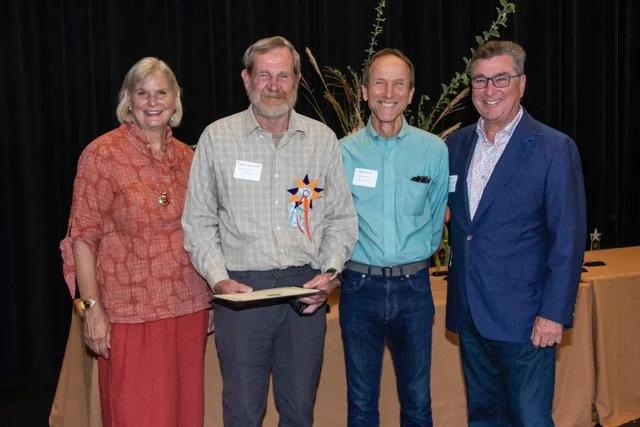
Mark Gonzalves (second from left) receiving the STAR Volunteer of the Year 2022 Award for his design and implementation of the Children’s Play Area at Sonoma Garden Park. Pictured above are, from left to right, Supervisor Susan Gorin, our Executive Director—Richard Dale, Mark Gonzalves, SEC Star Volunteer, and Dub Haye.
Can you tell us a little bit about your background? How did you come to design this play area?
I think volunteers are essential for a vibrant community. I have been volunteering in Sonoma Valley for many years. In fact, while in high school in the Peninsula, I volunteered at the then-Sonoma State hospital which prompted me to move to Glen Ellen. I have helped at the schools when my children were attending and spent many years on the Sonoma Soccer Board including being President.
I took the California Naturalist course from the Sonoma Ecology Center and one of my projects was building plant benches and a sign for the Sonoma Garden Park Nursery. That was my introduction to Sonoma Garden Park. Tony Passantino, the instructor, asked if I was interested in helping with the Children’s Play Area. As a landscape contractor for many years, I was thrilled to help out.
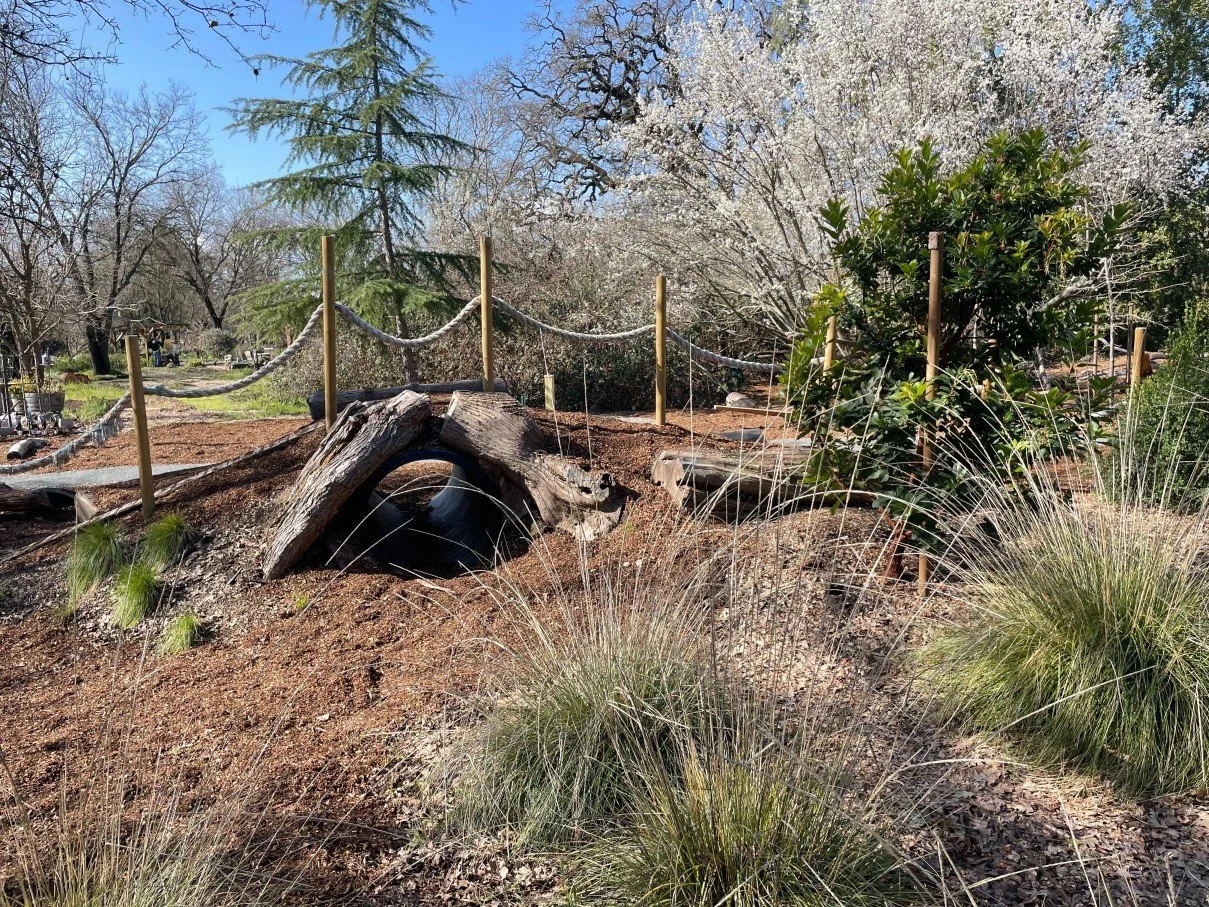
Mark reused logs and materials from another project to make the culvert for the tunnel at the Children’s Play Area. Above the culvert, the rope was brought from a tour to Alcatraz, where Mark and his wife asked if they could bring the un-used rope back to add to the Children’s Play Area.
What was your vision for the Children’s Play Area? Can you tell us a little bit about your design process?
In discussion with Tony, we wanted the Children’s Play Area to provide a place for kids to explore rather than having specific activities such as swings or slides. We also wanted to show the natural theme of the park.
For inspiration, we visited a wonderful preschool in Santa Rosa and got some ideas of what children liked in an outdoor setting and come up with specifics design ideas such as using gravel instead of sand for a play area, how to secure activity areas, and thoughts on the heights of tables and benches for kids. My initial drawing of the park encouraged one to meander through the area and find a place they enjoyed, maybe even out of sight of their parents!
We planted native plants: the Myrica californica (Pacific Wax myrtle) as a hedge to screen the neighbors from the new play area and two native oaks, Quercus agrifolia (Valley oak) and Quercus douglasii (Blue Oak) to provide shade to the area. We pruned a tunnel through the blackberry bushes and planted additional native shrubs and grasses to accent different areas and give some internal separation of the different play areas.
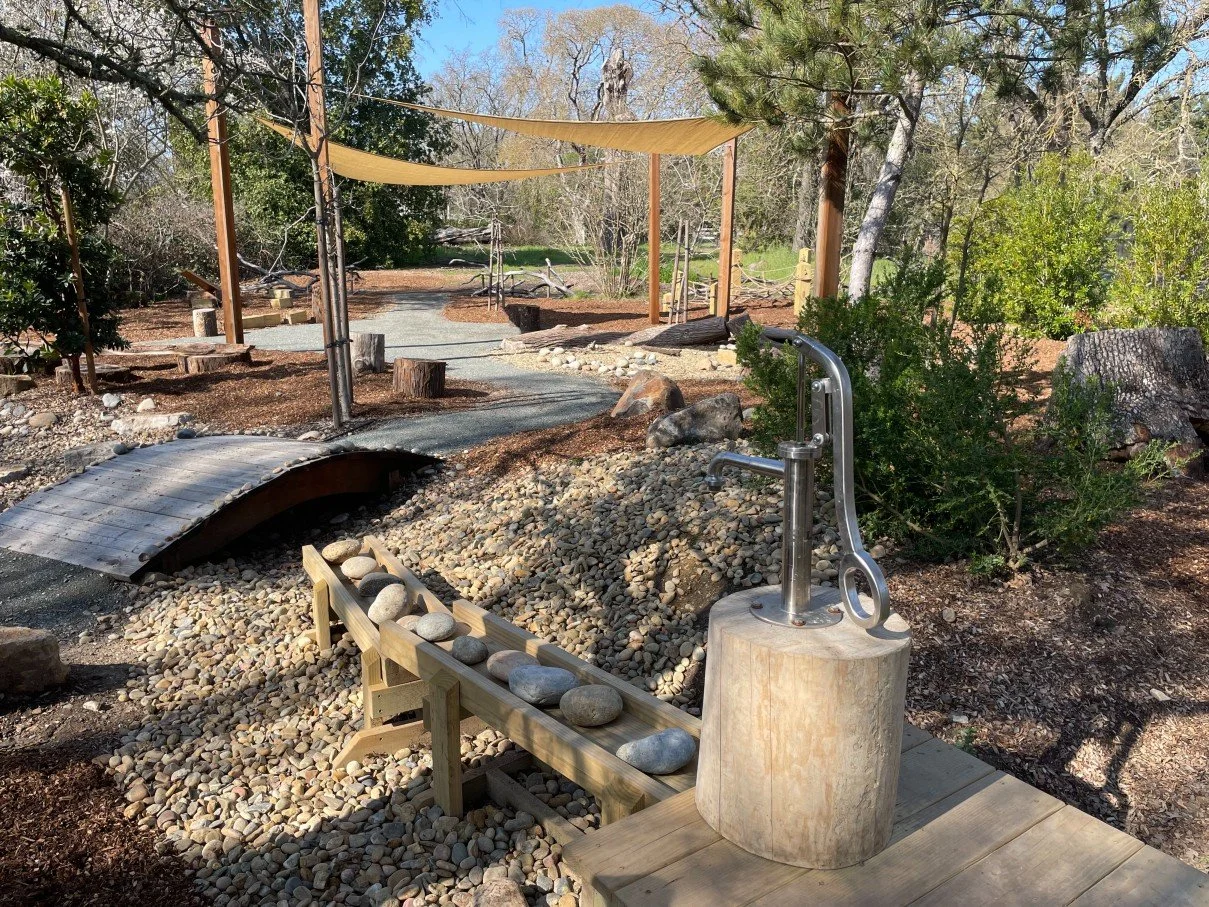
Many log structures, including the picnic table, kids table, and benches were made from wood of the Cypress tree that was cut at Sonoma Garden Park.
How did you choose to design and source materials for the play area? What was important for you in designing this project?
Reusing material was a big component. When we started the project, there was not much of a budget for materials. So through my work, I am always moving and re-using materials around from other projects. I used the wood from another project on fire prevention tree removal to build the now-fence near the picnic tables. We removed a deck to turn it into the bridge, and moved stones and boulders to create the beginning of the pond area.
I received redwood logs from a tree service and used materials from the Ghilotti construction yard to make the culvert for the tunnel. My favorite is the rope over the tunnel. While touring Alcatraz, my wife and I noticed a broken anchoring rope on the deck. After talking with the deckhand, who checked with the captain, I was informed that there was a rope waiting for me upon departure. I threw it over my shoulders, still wet, and took it to our car!
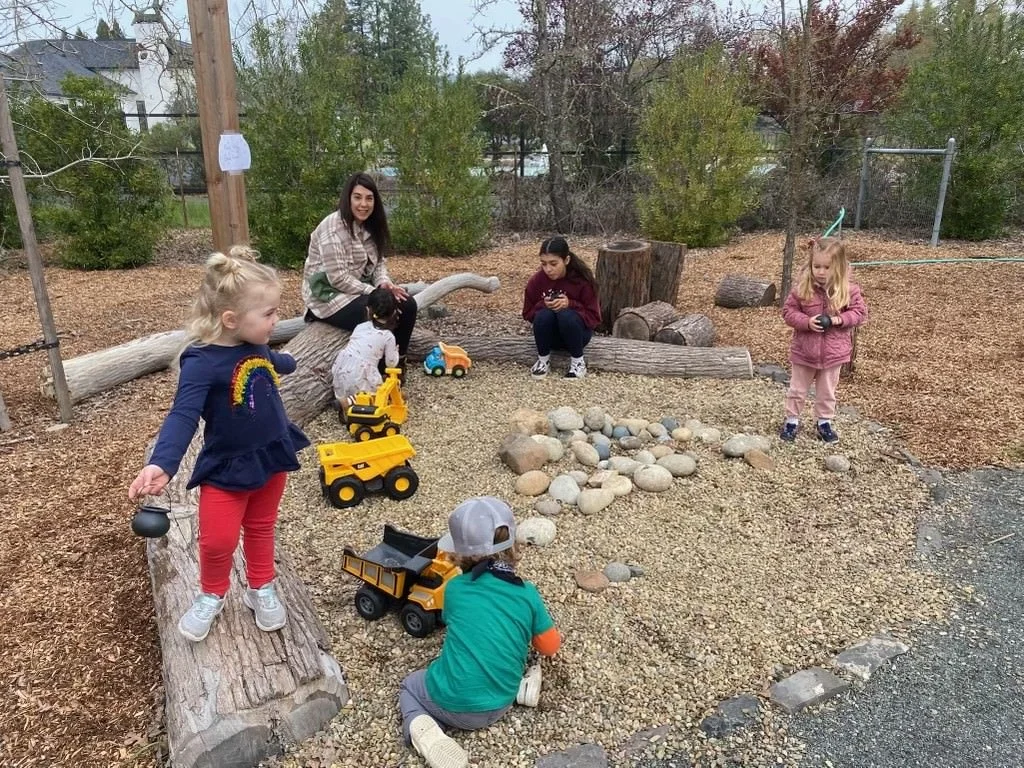
Children playing during a birthday party at the Children’s Play Area. Photo courtesy of Amanda Fleming.
Many of the log structures were made from limbs of the Cypress tree that was cut on site. The picnic table, kids table, and benches were made from logs of that same Cypress.
Once we received additional funding from the local donor, we were able to do much more. We brought in large trees and shrubs, over 40 yards of dirt for the mound, gravel for the pathways, and other assorted materials.
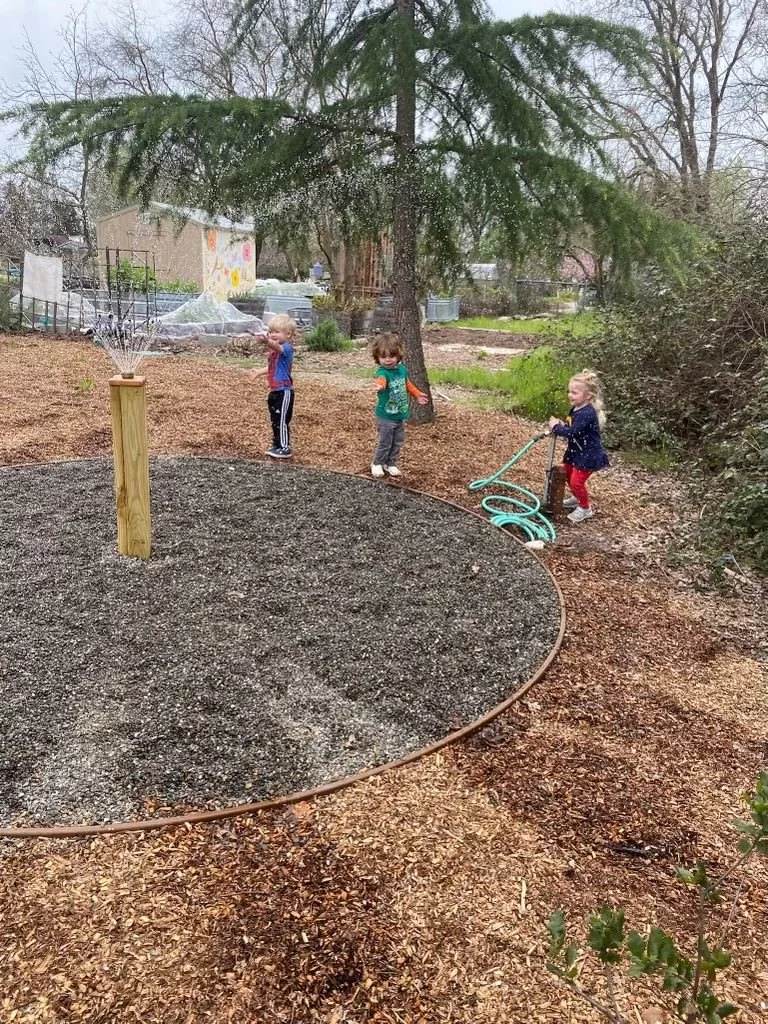
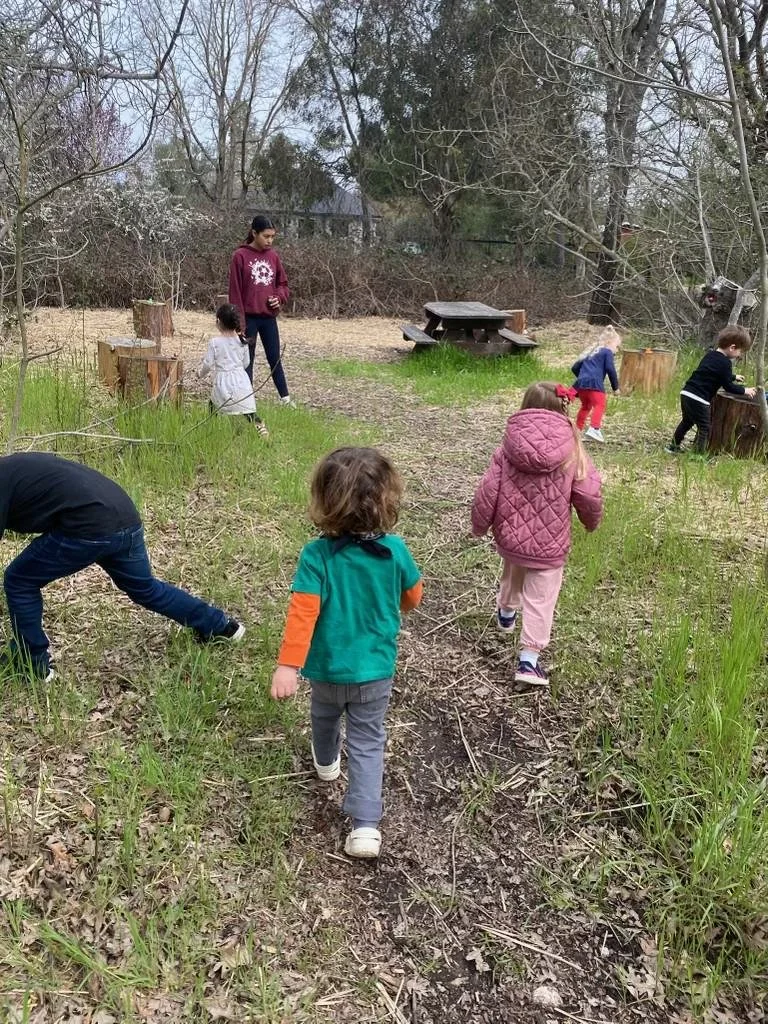
Children playing at the Children’s Play Area. The Play Area was built with the help of three Enviroleaders (paid interns of our sustainable agricultural vocational training program) under the supervision of Jonny Ehlers, SEC’s Education Project Manager). Photos courtesy of Amanda Fleming.
Is there anything else that you would like to share to the SEC community regarding your thoughts for the Children’s Play Area?
It was a pleasure to work with everyone who helped with the project. I had the chance to work with three Enviroleaders, under the supervision of Education Project Manager Jonny Ehlers, and taught them about planting, boulder placement, landscape design, and installation processes. It is fun to visit and see kids playing and moving around some of the scrap materials and even the small boulders to make the park their own.
I think we achieved our goal. The Children’s Play Area is inviting. Kids are exploring. And I must say it is beautiful!